

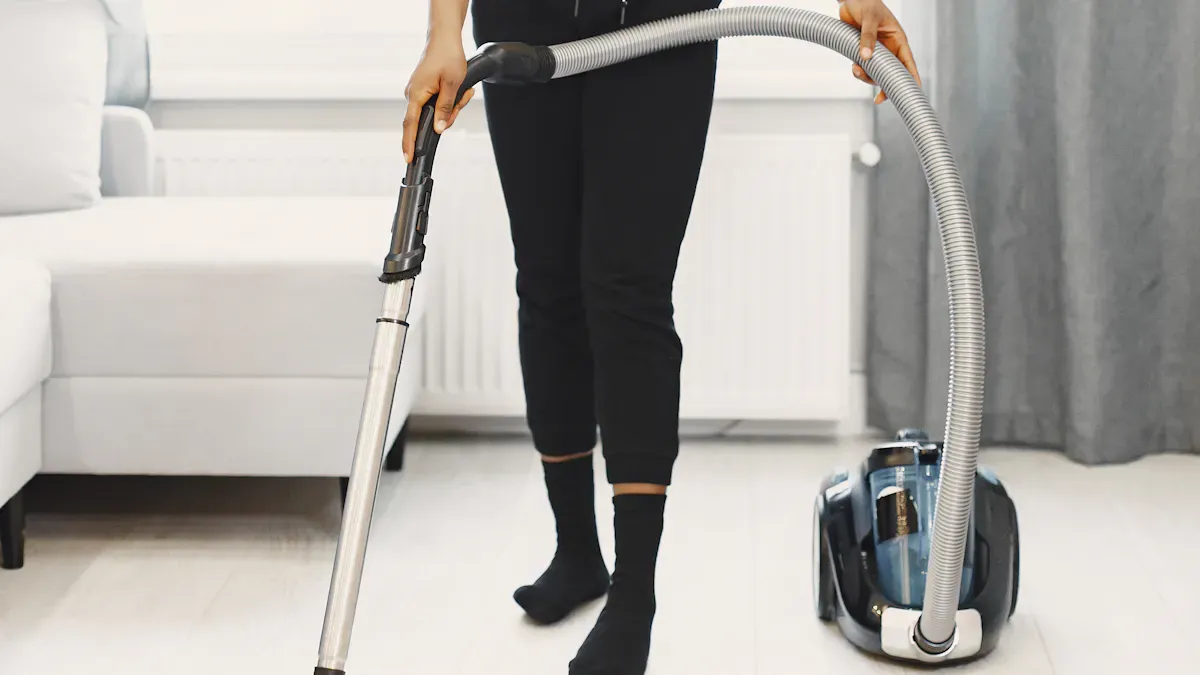
Vacuum cleaner suction power is the force that a vacuum uses to draw in dirt and debris. This power plays a crucial role in determining how effectively a vacuum can clean various surfaces. Generally, good vacuum cleaner suction power results in better cleaning performance. However, what constitutes “good” varies by vacuum type. For instance, a corded vacuum may have higher suction power than a cordless model.
Here’s a quick look at how vacuum cleaner suction power is measured:
Measurement | Description | Details |
|---|---|---|
Airflow (CFM) | The amount of air pulled through the vacuum. | Higher CFM means better cleaning efficiency. |
Air Watts (AW) | The power used for suction. | A higher AW number usually means stronger suction. |
Water Lift (Inches of H20) | The vacuum’s ability to lift water indicates its strength. | This shows how well the vacuum can lift water, a good indicator of its suction strength. |
Amps | The electrical current powering the vacuum. | Indicates the electrical power used by the vacuum. Important, but not the sole indicator of suction power. |
In fact, a study found that 60% of consumers considered vacuum cleaner suction power a crucial factor when selecting a vacuum cleaner.
Key Takeaways
Suction power is essential for effective cleaning. Strong suction helps remove dirt and allergens, especially in homes with pets.
Airflow and water lift are key metrics. High values in these areas indicate better cleaning performance.
Choose the right vacuum type based on your needs. Corded vacuums excel in deep cleaning, while cordless models offer convenience for daily tasks.
Regular maintenance boosts suction power. Empty dustbins, clean filters, and check for blockages to keep your vacuum performing well.
Understand consumer preferences. 60% of buyers prioritize suction power when selecting a vacuum cleaner.
Importance of Vacuum Cleaner Suction Power
Impact on Cleaning Performance
Suction power plays a vital role in how well your vacuum cleaner performs. Good suction power is essential for effectively removing dust, dirt, and debris from various surfaces. When you use a vacuum with strong suction, you can expect better cleaning results. Here are some key points to consider:
Efficient Dirt Removal: A vacuum with more suction power lifts dirt more efficiently. This is especially important for homes with pets or allergy concerns. Powerful suction helps eliminate pet hair and allergens from carpets and upholstery.
Surface Versatility: Different surfaces require different levels of suction. For example, carpets often need more suction than hard floors. A vacuum with good suction power adapts to these needs, ensuring thorough cleaning across all areas of your home.
Time-Saving: With effective suction, you spend less time vacuuming. You can quickly clean your floors without needing to go over the same spot multiple times.
Suction Power vs. Other Features
While suction power is crucial, it is not the only feature that affects cleaning performance. You should also consider airflow, which works hand-in-hand with suction. The relationship between suction and airflow can significantly impact how well your vacuum cleans.
Suction Power (kPa) | Effectiveness Description |
|---|---|
12–14 | Adequate for loose dust and surface crumbs on smooth surfaces, but fails on medium-pile carpet or embedded hair. |
15–18 | Optimal range for 92% of real-world vehicle interiors, verified across 17 vehicle models. |
>19 | Diminishing returns; increases motor heat, noise, and battery drain without proportional cleaning gain. |
As you can see, higher suction power does not always guarantee better cleaning. It is essential to find a balance between suction and airflow for optimal performance. A vacuum that combines good suction power with efficient airflow will provide the best cleaning experience.
How Suction Power is Measured
Understanding how manufacturers measure suction power helps you choose the right vacuum cleaner. One of the most important metrics is Air Watts (AW).
Understanding Air Watts
Air Watts measure the effectiveness of a vacuum cleaner’s suction power. This metric combines both airflow and suction, giving you a clearer picture of how well a vacuum can clean. Here’s a quick overview of Air Watts:
Air Watts (AW) | Description |
|---|---|
100 AW | Industry baseline for strong, effective household cleaning. |
200+ AW | Found in ultra-powerful cordless stick vacuums designed for deep-pile carpets and heavy debris. |
A vacuum cleaner with higher Air Watts typically offers better performance. When you see a vacuum with 100 AW or more, you can expect it to handle most cleaning tasks effectively.
Other Measurement Metrics
Besides Air Watts, several other metrics help you understand vacuum suction power. Here are some common ones:
CFM (Cubic Feet per Minute): This measures airflow, indicating how much air the vacuum can move. Higher CFM means better cleaning efficiency.
Water Lift (sealed suction): This measures the vacuum’s ability to lift water, reflecting suction strength. A higher water lift indicates stronger suction.
PSI (Pounds per Square Inch): This measures the pressure exerted by the vacuum. It helps you understand how well the vacuum can pick up debris.
Different manufacturers may use various methods to measure these metrics. Here’s a table summarizing some standard units used in measuring suction power:
Unit | Description |
|---|---|
atm | Standard atmospheric pressure, 760 mmHg |
PSI | Pounds per square inch, absolute or gauge |
inHg | Inches of mercury |
mmHg | Millimeters of mercury |
Torr | Almost equal to millimeters of mercury |
micron | 1 millitorr is 1000th of a Torr |
kPa | Kilopascals, newton-force per square meter |
mbar | Millibars, bar (kPa x 100) x 1000 |
These metrics provide a comprehensive view of vacuum suction power. When comparing different models, consider these measurements to find the vacuum that best suits your cleaning needs.
Suction Power by Vacuum Type
Corded Vacuums
Corded vacuums typically offer strong suction power, making them ideal for deep cleaning. Most upright models provide suction power ranging from 100 to 200 Air Watts (AW) or approximately 15,000 to 25,000 Pascals (Pa). These vacuums excel at removing dirt from carpets and upholstery. Their consistent power allows you to tackle tough messes without worrying about battery life.
Tip: If you have a larger home or need to clean heavy debris, consider a corded vacuum for its high suction capabilities.
Cordless Vacuums
Cordless vacuums have gained popularity for their convenience. They usually provide suction power between 150 and 310 AW or 20,000 to 30,000 Pa. This range is suitable for daily cleaning tasks and works well on hard floors. However, keep in mind that while they offer flexibility, their suction may not match that of corded models for deep cleaning.
Higher suction power enhances cleaning efficiency, especially in homes with pets or allergy concerns.
Consumers often prioritize suction power because it directly influences their cleaning experience.
Robot Vacuums
Robot vacuums are designed for autonomous cleaning. Their suction power ranges from 3,000 to 8,000+ Pa. While this may seem lower than traditional vacuums, many models effectively handle light debris and maintain cleanliness between deeper cleans.
Vacuum Type | Suction Power Range | Ideal For |
|---|---|---|
Cordless Stick | 150–310 AW / 20,000–30,000 Pa | Daily cleaning and hard floors |
Robot | 3,000–8,000+ Pa | Autonomous cleaning, light debris |
Note: For homes with pets, look for robot vacuums with higher suction power, ideally above 4,000 Pa, to effectively pick up pet hair and dirt.
Understanding the suction power of different vacuum types helps you choose the right one for your cleaning needs. Whether you prefer the strong suction of corded vacuums, the convenience of cordless models, or the autonomy of robot vacuums, knowing their capabilities can enhance your cleaning experience.
Factors Affecting Suction Power
Filter Types
The type of filter in your vacuum cleaner significantly impacts its suction power. For example, HEPA filters are known for their dense material. While they effectively trap 99.97% of particles as small as 0.3 microns, they can reduce suction power by 20-40% compared to standard filters. Standard foam filters capture only 70-80% of larger debris, allowing fine allergens to pass through. This difference can affect your cleaning efficiency, especially if you have pets or allergies.
Maintenance Practices
Regular maintenance is essential to maintain good suction power over time. Here are some recommended practices to enhance your vacuum’s performance:
Empty the dustbin regularly: Keeping the dustbin empty helps maintain steady airflow. A full dustbin can lead to a significant loss of suction.
Clean or replace filters: Follow the manufacturer’s schedule for cleaning or replacing filters. This prevents airflow blockage and keeps your vacuum running efficiently.
Clear blockages: Check the hose, nozzle, and intake path for any clogs. Blockages can severely impact suction power.
Maintain the brush roll: Remove hair and fibers from the brush roll. This ensures consistent pickup performance, especially for pet hair removal.
Check seals and belts: Inspect seals and belts regularly. Worn seals can lead to reduced suction, while a damaged belt can weaken brush roll performance.
Adjust height settings: Set the height according to the surface you are cleaning. This adjustment can improve suction on different floor types.
By following these maintenance tips, you can enhance your vacuum’s performance and extend its lifespan. Regular upkeep can prevent suction loss and ensure effective deep cleaning, especially on thick carpets.
Choosing the right suction power for your vacuum cleaner is essential for effective cleaning. Here are some key takeaways:
Suction power is crucial for cleaning efficiency and performance.
Excellent airflow and water lift specifications indicate a vacuum’s superior cleaning ability.
For homes with a lot of carpet, an upright vacuum is recommended as it can penetrate deeper into carpet fibers.
Recent surveys show that 60% of consumers prioritize suction power when selecting a vacuum cleaner. Here’s a breakdown of consumer preferences:
Factor | Percentage of Consumers |
|---|---|
Suction Power | 60% |
Price | 58% |
Brush Roll Performance | 10.2% |
Filtration Systems | 9.9% |
Brand Loyalty | 8.8% |
Amps | 2.7% |
Storage Convenience | 30% |
Feedback from Other Consumers | 18% |
Modern Features | 11% |
Design | 6% |
By understanding these factors, you can make an informed decision that meets your cleaning needs.
FAQ
What is suction power in a vacuum cleaner?
Suction power refers to the force a vacuum cleaner uses to draw in dirt and debris. It significantly affects cleaning efficiency and performance across different surfaces.
How can I measure a vacuum’s suction power?
You can measure suction power using metrics like Air Watts (AW), airflow (CFM), and water lift (inches of H2O). These measurements help you compare different vacuum models effectively.
Does higher suction power always mean better cleaning?
Not necessarily. While higher suction power can improve cleaning, effective airflow is equally important. A balance between suction and airflow ensures optimal cleaning performance.
How often should I maintain my vacuum cleaner?
Regular maintenance is essential. You should empty the dustbin after each use, clean or replace filters monthly, and check for blockages to maintain suction power.
What type of vacuum is best for pet hair?
For pet hair, consider a vacuum with strong suction power, ideally above 4,000 Pa. Corded vacuums or high-performance cordless models often work best for this purpose.
