

Whenever your bedroom sounds like a soft fan and your air still feels stale, you know quiet filtration matters. You want an air purifier that clears dust, smoke, and pollen without driving up your bill or keeping you awake. The best models balance HEPA performance, low wattage, and smart airflow, with sleep modes that stay nearly silent. A few standouts do this well, but which one fits your room?
| LUNINO HEPA Air Purifier for Large Rooms | 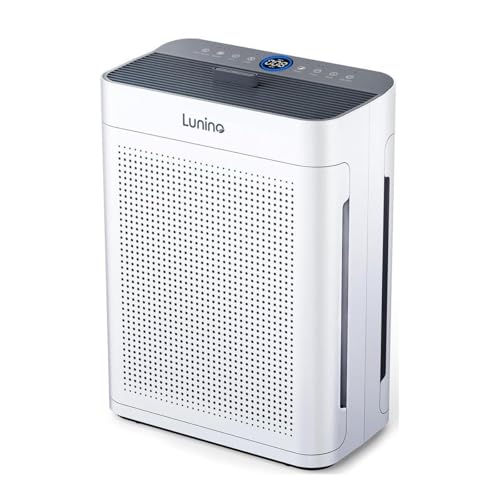 | Best for Large Rooms | Filtration: 3-stage HEPA | Coverage: Up to 3000 ft² | Noise: 15 dB | CHECK LATEST PRICE | Check Our Analysis |
| Aucleia HEPA Air Purifier for Bedroom Home |  | Best for Bedrooms | Filtration: H13 True HEPA | Coverage: Up to 588 ft² | Noise: 20 dB | CHECK LATEST PRICE | Check Our Analysis |
| VEWIOR 2 Pack Air Purifiers for Large Rooms | 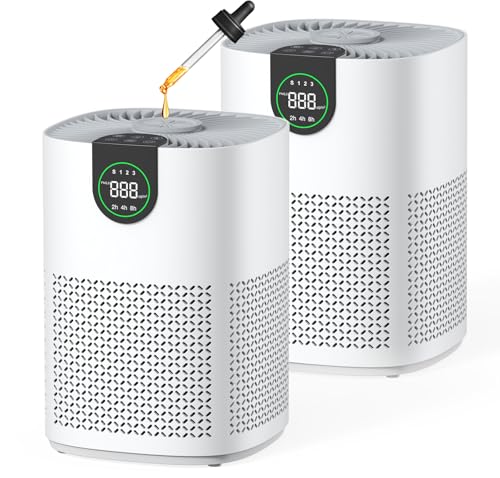 | Best 2-Pack | Filtration: 3-stage H13 HEPA | Coverage: Up to 1200 ft² | Noise: 15 dB | CHECK LATEST PRICE | Check Our Analysis |
| Air Purifier for Large Rooms with True HEPA | 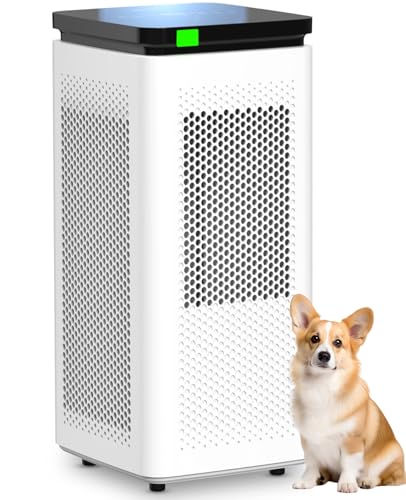 | Best for Smoke | Filtration: H13 True HEPA | Coverage: Up to 3500 ft² | Noise: Quiet | CHECK LATEST PRICE | Check Our Analysis |
| PuroAir 100i Smart HEPA Air Purifier | 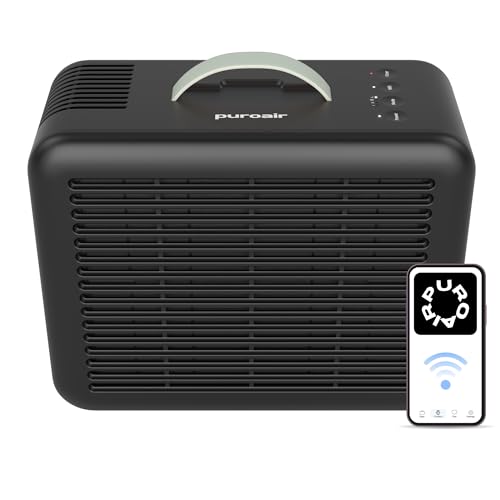 | Best Smart Pick | Filtration: 3-layer HEPA | Coverage: Up to 550 ft² | Noise: Quiet | CHECK LATEST PRICE | Check Our Analysis |
More Details on Our Top Picks
LUNINO HEPA Air Purifier for Large Rooms
Looking for clean air across a big space? You can count on the LUNINO HEPA Air Purifier for Large Rooms. Its double-sided intake pulls air from both sides at once, so you get purification up to 2x faster and coverage up to 3000 ft². You can use it in lounge rooms, bedrooms, offices, or pet homes. The 3-stage HEPA system traps 99.97% of pollutants, including pet hair, smoke, PM2.5, and pollen. You’ll also appreciate the washable pre-filter, real-time PM2.5 display, six fan modes, sleep mode at 15dB, and aromatherapy pad for added freshness.
- Filtration:3-stage HEPA
- Coverage:Up to 3000 ft²
- Noise:15 dB
- Auto Mode:Yes
- Aromatherapy:Yes
- Timer:2/4/8 hr
- Additional Feature:Double-sided air intake
- Additional Feature:Washable pre-filter
- Additional Feature:Child lock feature
Aucleia HEPA Air Purifier for Bedroom Home
Should you need a compact purifier for bedrooms, Aucleia’s 20 dB sleep mode keeps things whisper-quiet. You get a round 360° intake, diamond inlets on every side, and top airflow that helps clean rooms up to 588 ft² five times an hour. Its H13 True HEPA system traps 99.9% of particles as small as 0.01 micron, including smoke, dust, pollen, pet hair, and dander. At just 5 W, you can run it all night. Use one button, pick sleep, cozy, or turbo, and add aroma with the top tray.
- Filtration:H13 True HEPA
- Coverage:Up to 588 ft²
- Noise:20 dB
- Auto Mode:No
- Aromatherapy:Yes
- Timer:None
- Additional Feature:360-degree air intake
- Additional Feature:Compact desktop size
- Additional Feature:Gift box packaging
VEWIOR 2 Pack Air Purifiers for Large Rooms
Need quiet coverage for multiple rooms? You get a 2-pack of VEWIOR purifiers that fit lounge rooms, bedrooms, offices, basements, and kitchens. Their 360° intake helps refresh air five times per hour in spaces up to 1200 sq. ft. Each unit uses a 3-stage system with a washable pre-filter, H13 HEPA filter, and activated carbon to trap 99.97% of contaminants, including pet hair, smoke, odors, and PM2.5. You can monitor PM2.5 in real time, let auto mode adjust speed, and enjoy sleep mode at just 15 dB, plus aromatherapy and child lock.
- Filtration:3-stage H13 HEPA
- Coverage:Up to 1200 ft²
- Noise:15 dB
- Auto Mode:Yes
- Aromatherapy:Yes
- Timer:2/4/8 hr
- Additional Feature:2-pack value
- Additional Feature:Air quality sensor
- Additional Feature:Panel darkens sleep
Air Purifier for Large Rooms with True HEPA
For large rooms, this True HEPA purifier tackles smoke, dust, and odors with ease. You get H13 filtration that captures 0.1 μm particles and removes 99.97% of airborne contaminants. It pulls in dust, pollen, pet dander, pet hair, and everyday particulates, while the activated carbon filter helps reduce pet odors, cigarette smoke, wildfire smoke, cooking smells, and household odors. You’ll also cut VOCs and other indoor pollutants. It’s a smart pick provided that you’ve got pets, smoke indoors, or need cleaner air in spaces up to 3,500 ft².
- Filtration:H13 True HEPA
- Coverage:Up to 3500 ft²
- Noise:Quiet
- Auto Mode:No
- Aromatherapy:No
- Timer:None
- Additional Feature:Captures 0.1 microns
- Additional Feature:Removes VOCs
- Additional Feature:Wildfire smoke support
PuroAir 100i Smart HEPA Air Purifier
Provided you want a quiet, connected purifier, the PuroAir 100i is a smart pick for bedrooms, nurseries, and home offices. You can cover rooms up to 550 sq ft in an hour while enjoying quiet operation. Its 3-layer system uses a pre-filter, True HEPA filter, and activated carbon to capture up to 99.9% of dust, pollen, smoke, odors, pet dander, and pet hair. Use the PuroAir App to adjust fan speed and settings over Wi-Fi. With an American Lung Association partnership, a 2-year warranty, and USA-based support, you can buy with confidence.
- Filtration:3-layer HEPA
- Coverage:Up to 550 ft²
- Noise:Quiet
- Auto Mode:No
- Aromatherapy:No
- Timer:None
- Additional Feature:Wi-Fi app control
- Additional Feature:USA-based support
- Additional Feature:2-year warranty
Factors to Consider When Choosing Energy Efficient Quiet Air Purifiers
When you choose an energy efficient quiet air purifier, you should compare noise level ratings, energy use per mode, and coverage efficiency. You’ll also want to check filter maintenance costs so you know the long-term expense. Auto sensors can help the unit adjust performance for better comfort and savings.
Noise Level Ratings
Noise level ratings matter just as much as energy efficiency, especially should you plan to run the purifier in a bedroom or nursery. Check the decibel number in the quietest setting foremost; many sleep modes stay around 15–20 dB, which works well at night. Then compare noise across low, auto, high, and turbo speeds, because a unit that seems silent on low can get noticeably louder later. Look for sleep or night mode, too, since it often dims the display and slows the fan. Match the purifier to your room size, because larger airflow usually means more sound. Finally, choose a model with a specific noise rating instead of vague claims like “whisper quiet” or “ultra quiet.”
Energy Use Per Mode
Energy use per mode matters because the setting you choose can change your running cost a lot. You should compare wattage across sleep, low, medium, high, and turbo settings, since quiet modes often sip power while turbo can raise your electric bill fast. A purifier that uses 5 W in low or sleep mode will cost far less to run than a model that draws much more. Check whether auto mode adjusts fan speed based on air quality; that can keep energy use down whenever the air’s already clean. Also consider how many hours you’ll use each mode each day. Even a small wattage gap adds up over 24/7 use, so estimate annual operating cost whenever you can.
Coverage Efficiency
Coverage efficiency matters because you want the purifier to clean the whole room without working harder than it should. Match the purifier’s rated coverage to your space: a unit built for about 550 sq ft will struggle in a much larger room, while a model rated for 3,000–3,500 sq ft can handle bigger areas more easily. Check how many air changes per hour it delivers, since more refresh cycles improve performance in occupied rooms. In open-plan layouts, a double-sided or 360° intake can pull air from more directions and spread cleaning more evenly. If you want low-noise comfort, look for strong coverage in sleep mode around 15–20 dB. A built-in sensor and auto mode can also help by boosting fan speed only when air quality drops.
Filter Maintenance Costs
Filter maintenance costs can sneak up on you whenever you don’t plan ahead, so it’s worth checking how often each filter needs attention before you buy. You’ll save money provided you choose a purifier with a washable or vacuumable pre-filter, because routine cleaning can stretch the life of the main filters. Check the recommended replacement schedule for the HEPA filter, since many units need a fresh one every 3 to 6 months, depending on how hard you run them and how dirty your air is. Provided the purifier uses activated carbon too, factor in that replacement separately. Add up filter prices and change frequency to estimate your true annual cost. A replacement indicator light can also help you stay on schedule and keep performance strong.
Auto Sensors
How do auto sensors help you get cleaner air without wasting power? You’ll want a purifier that tracks real-time indoor air quality, often through measuring PM2.5, so it can raise or lower fan speed on its own. This kind of auto mode saves energy because the unit can stay at lower speeds whenever your air is clean and only work harder while dust, smoke, or pollen spikes. Look for live feedback, like a PM2.5 display or colored indicator lights, so you can see what’s happening at a glance. The best models pair auto sensing with several fan speeds and quiet low-power settings. Make sure the purifier explains how the sensor affects airflow and lets you switch easily between auto and manual control.
Sleep Mode Features
Sleep mode matters should you want clean air at night without the noise or light. You’ll want a purifier that stays around 15–20 dB, so it won’t bother light sleepers, children, or anyone with a sleep disorder. A strong sleep mode also dims or shuts off the display, which helps you avoid bedroom light pollution. Most models cut fan speed in this mode, yet they keep cleaning your air all night. That matters when you run your purifier for long stretches and want low power use. Some units go further via pairing sleep mode with automatic air-quality controls, so they stay quiet but still increase airflow when conditions change. With the right sleep mode, you get steady overnight filtration and better rest.
Frequently Asked Questions
How Often Should I Replace the Air Purifier Filter?
Replace the air purifier filter every 6 to 12 months. Heavier use, poor indoor air, and certain filter types can shorten that window. Inspect it each month, and change it sooner if airflow weakens or odors come back.
Can Air Purifiers Remove Pet Odors Effectively?
Yes, an air purifier with activated carbon and a true HEPA filter can cut pet odors noticeably. Running it all day and keeping the filters clean helps keep the room smelling fresher.
Do Air Purifiers Help Reduce Allergy Symptoms?
Yes, an air purifier with a HEPA filter can often lessen allergy symptoms. It traps pollen, dust, and pet dander from the air, which may make breathing easier, although you will still need other allergy control measures.
Are Air Purifiers Safe to Run Overnight?
Yes, you can keep an air purifier running overnight. A quiet model with proper certification can improve bedroom air, and regular filter cleaning helps it work safely. Avoid units that produce ozone.
How Much Electricity Does a Quiet Air Purifier Use?
You’ll usually use about 5 to 60 watts, so your purifier may add only a few dollars to your monthly bill. Check the wattage label, then multiply by the hours used and your local electricity rate.
Wrap Up
When you choose the right energy-efficient quiet air purifier, you don’t just freshen your room—you change the air you live in. The best models work hard, yet whisper in the background, using smart sensors and strong filtration to keep dust, smoke, and odors from settling in. But the real test comes tonight: will your purifier stay silent, save energy, and still clear the air while you sleep? You’ll know soon enough.
