

You may not realize that suction pool cleaners can do more than just pick up debris—they can also help protect delicate pool surfaces while cleaning floors, walls, and waterlines. Should you’re trying to choose the right Evolution-style model, the differences in hose length, maneuverability, and coverage can matter more than you’d expect. The best options look similar at initial glance, but one detail can change everything.
| U.S. Pool Supply Octopus Suction Pool Cleaner |  | Quiet Power Pick | Pool Type: In-ground; some above-ground | Cleaning Scope: Floors, walls, steps | Suction Power: 1/2 HP minimum | CHECK LATEST PRICE | Check Our Analysis |
| Cordless Pool Vacuum with Telescopic Pole | Cordless Convenience | Pool Type: Above-ground, inground, spas, hot tubs | Cleaning Scope: Floors, walls, steps | Suction Power: 18.5 GPM suction | CHECK LATEST PRICE | Check Our Analysis | |
| XtremepowerUS Automatic Pool Cleaner Sweeper Vacuum (Blue) |  | Heavy-Duty Cleaner | Pool Type: In-ground; above-ground | Cleaning Scope: Top-to-bottom cleaning | Suction Power: 1 HP minimum | CHECK LATEST PRICE | Check Our Analysis |
| Polaris MAXX Premium Suction-Side Automatic Pool Cleaner | 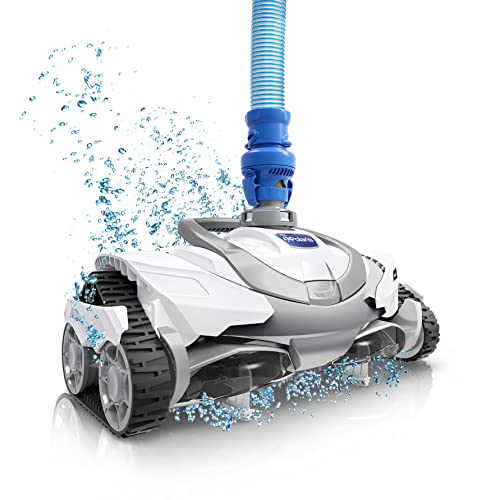 | Best Scrubber | Pool Type: All in-ground pools | Cleaning Scope: Floor, walls, waterline | Suction Power: Low-flow suction | CHECK LATEST PRICE | Check Our Analysis |
| Hayward TracVac Pool Vacuum for Inground Pools |  | Best for Inground Pools | Pool Type: Inground pools | Cleaning Scope: Floor, walls | Suction Power: Pool suction | CHECK LATEST PRICE | Check Our Analysis |
More Details on Our Top Picks
U.S. Pool Supply Octopus Suction Pool Cleaner
Should you want a quiet power pick for your in-ground pool, the U.S. Pool Supply Octopus Suction Pool Cleaner uses suction to clean floors, climb walls, and reach steps. You get strong, fast cleaning with a long-life diaphragm that cuts flapper noise. The 33-foot hose includes 20 sections, so you can adjust it to fit your pool, and the snug connection helps prevent leaks. It needs a 1/2 HP pump or 1,000 gallons per hour, and it works with some above-ground pools too. A replacement diaphragm comes included.
- Pool Type:In-ground; some above-ground
- Cleaning Scope:Floors, walls, steps
- Suction Power:1/2 HP minimum
- Hose Length:33 ft
- Noise Level:Quiet
- Power Source:Suction powered
- Additional Feature:Long-life diaphragm membrane
- Additional Feature:Deflector wheel navigation
- Additional Feature:Replacement diaphragm included
Cordless Pool Vacuum with Telescopic Pole
Need an easy, back-friendly clean for your pool, spa, or hot tub? This cordless pool vacuum gives you 18.5 GPM suction to lift leaves, fine sand, dirt, and debris from above ground and inground pools. You’ll move freely with no tangled cords or hoses, while the telescopic aluminum pole helps you reach floors, walls, steps, and tight corners. Two soft-bristle brush heads tackle flat surfaces and edges, and they’re safe for vinyl liners. The rechargeable lithium-ion battery powers long sessions, and the reusable filter bag keeps cleanup simple.
- Pool Type:Above-ground, inground, spas, hot tubs
- Cleaning Scope:Floors, walls, steps
- Suction Power:18.5 GPM suction
- Hose Length:32 in
- Noise Level:Not specified
- Power Source:12V electric
- Additional Feature:Telescopic aluminum pole
- Additional Feature:Two brush heads
- Additional Feature:IPX8 waterproof construction
XtremepowerUS Automatic Pool Cleaner Sweeper Vacuum (Blue)
XtremepowerUS’s heavy-duty cleaner suits you should you want easy, quiet, automatic pool maintenance. You can assemble it quickly, connect it to your existing filtration system, and let it handle the work. With a 30-foot hose set and 1.5-inch connection, it fits in-ground and above-ground pools of many shapes and sizes, though not stairs. It climbs walls, sweeps top to bottom, and removes dirt and debris without jamming. You’ll also appreciate the super-quiet operation, scuff-resistant hoses, and wheel deflector for tight corners. For best results, use a 1 HP pump with 1600 gal/h flow.
- Pool Type:In-ground; above-ground
- Cleaning Scope:Top-to-bottom cleaning
- Suction Power:1 HP minimum
- Hose Length:30 ft
- Noise Level:Super quiet
- Power Source:Suction powered
- Additional Feature:Easy assemble install
- Additional Feature:Wheel deflector corners
- Additional Feature:Scuff-resistant hoses
Polaris MAXX Premium Suction-Side Automatic Pool Cleaner
Polaris MAXX’s active scrubbing brushes make it a standout for pools that need serious wall-to-floor cleaning. You can use it on all in-ground surfaces, and it covers the floor, walls, and waterline with concentrated scrubbing that pushes debris toward the suction inlet. HALO Technology helps you handle fine silt, sand, and larger debris without clogging. Smart multi-directional routeing and powerful turbines improve climbing and coverage. Its hydraulic design works at lower flow rates, while replaceable brushes and a regulator valve reduce wear and keep performance strong.
- Pool Type:All in-ground pools
- Cleaning Scope:Floor, walls, waterline
- Suction Power:Low-flow suction
- Hose Length:Not specified
- Noise Level:Not specified
- Power Source:Hydraulic suction
- Additional Feature:Active scrubbing brushes
- Additional Feature:HALO Technology
- Additional Feature:Smart multi-directional navigation
Hayward TracVac Pool Vacuum for Inground Pools
Hayward’s TracVac suits inground pools, especially should you want steady suction and wall-to-wall cleaning. You can use it on concrete, gunite, fiberglass, vinyl, and tile surfaces in pools up to 20 x 40 feet. Its rugged tracks help it climb obstacles better than standard wheeled cleaners, while the self-propelled design keeps it moving across floors and walls. You connect it to your suction port or skimmer, and it runs without batteries or an internal filter. The 2023 gray model includes a 38.83-foot hose, flow gauge, and regulator valve for easy setup.
- Pool Type:Inground pools
- Cleaning Scope:Floor, walls
- Suction Power:Pool suction
- Hose Length:38.83 ft
- Noise Level:Not specified
- Power Source:Pool suction
- Additional Feature:Rugged track mobility
- Additional Feature:Constant suction power
- Additional Feature:Flow gauge included
Factors to Consider When Choosing Evolution Suction Pool Cleaners
When you choose an Evolution suction pool cleaner, make sure it fits your pool type and matches your suction power needs. You’ll also want the right hose length and enough cleaning coverage to reach every area. Don’t forget to check noise levels so you can keep pool cleaning as quiet as possible.
Pool Compatibility
Before you choose an Evolution suction pool cleaner, make sure it fits your pool’s type, surface, and layout. You’ll want a model that’s made for your pool style, since some work only in in-ground pools while others also suit certain above-ground, self-supporting pools. Check surface compatibility too: vinyl liners, concrete, gunite, fiberglass, and tile all have different needs, and some cleaners shouldn’t touch soft-wall or vinyl-lined pools. Also, confirm it can clean the areas you care about, including floors, walls, steps, waterlines, ladders, and tight corners. Finally, match the hose reach or size range to your pool, and verify your circulation system meets the cleaner’s requirements so it can operate properly without any surprises.
Suction Power Needs
Suction power can make or break an Evolution suction pool cleaner’s performance, so you’ll want enough pump output to keep it moving steadily and lifting debris well. Many models need at least 1/2 HP or roughly 1,000 gallons per hour to work properly. When your suction source is too weak, the cleaner may crawl, skip debris, or struggle to climb floors, walls, and steps. Stronger suction also helps you tackle leaves, dirt, sand, and fine silt, which matters after storms or heavy pool use. Because self-propelled cleaners rely on stable water flow, consistent suction helps them maintain traction, steer turns, and handle obstacles. When the flow feels too strong, use a regulator valve so you can control wear and keep performance efficient.
Hose Length
Just as suction power affects how well an Evolution cleaner moves, hose length determines whether it can reach every part of your pool without strain. You’ll want enough hose to span the farthest point in your pool, and many suction cleaners offer lengths around 30 to 38.83 feet or more. For larger in-ground pools, a longer setup helps the cleaner travel naturally, while a shorter one can suit smaller pools or quick spot cleaning. Adjustable hose sections let you fine-tune the fit to your pool’s dimensions and cut down on slack that can interfere with movement. Make sure the hose lets the cleaner climb walls and handle steps without pulling tight. A snug, properly assembled hose also helps prevent leaks and keeps suction strong.
Cleaning Coverage
Cleaning coverage matters because you want an Evolution suction cleaner that actually reaches every part of your pool, not just the easy spots. You should check that it can clean the floor, walls, waterline, steps, and tight corners, so you’re not left scrubbing afterward. If your pool has mixed surfaces or may change later, look for models that work in both in-ground and above-ground setups. You’ll also want obstacle-handling features like wheel deflectors, multi-directional navigation, or tracked movement if ladders and irregular shapes get in the way. Finally, confirm the cleaner matches your pool’s surface material, whether that’s vinyl, fiberglass, concrete, gunite, or tile, because the right fit helps it cover more area safely and consistently without missing important sections.
Noise Levels
Noise is worth paying attention to because suction pool cleaners usually run quieter than many pressure- or motor-driven options, which can make routine cleaning far less intrusive. If you compare models, look for ones that advertise reduced hammer or flapper noise; diaphragm-style suction systems often feel smoother and sound less harsh. If you plan to run the cleaner while you’re home, lower sound output can make upkeep easier to live with. You should also take note whether the unit uses hydraulic or multi-directional systems, since efficient movement doesn’t have to mean more noise. Should the cleaner rely on tracks, brushes, or deflectors, check that those parts move quietly too, because contact noise can raise the entire sound level more than you could expect.
Surface Safety
Beyond how quietly a cleaner runs, you should also consider how safely it moves across your pool’s surfaces. You’ll want brushes, wheels, or tracks that glide smoothly without scuffing delicate finishes. Should you’ve got a vinyl-lined pool, confirm the cleaner is explicitly rated safe for vinyl, because some suction models can damage soft walls. Soft bristles, scuff-resistant hoses, and replaceable scrubbing brushes can help protect the floor, walls, and steps while still lifting debris. Also, choose a model matched to your pool’s surface, whether it’s concrete, fiberglass, tile, or vinyl, so it cleans effectively without adding wear. A wheel deflector or smart route guidance can further reduce contact with ladders, corners, and steps, helping you keep every surface in better shape over time.
Ease Of Setup
When it comes to setup, you’ll want an Evolution suction pool cleaner that connects easily to your existing filtration system or installs inline without extra tools or complicated plumbing. Choose a model that includes a full hose set, regulator valve, float, and adapters so you can get started faster and avoid hunting for missing parts. A longer hose, ideally 30 to 39 feet, gives you more flexibility upon fitting the cleaner to different pool sizes. You’ll also simplify installation whether the unit runs directly from pool suction, since you won’t need batteries, charging, or electrical hookups. Whether assembly is required, look for a cleaner that claims a quick setup time of about five minutes. That’s a strong sign it’s beginner-friendly and easy to use.
Frequently Asked Questions
How Often Should I Replace the Cleaner’s Diaphragm?
Replace the cleaner’s diaphragm every 1 to 2 seasons, or earlier if you see tears, weak suction, or uneven movement. Inspect it often and replace it as soon as wear begins to hurt performance.
Can Suction Cleaners Handle Large Leaves and Twigs?
No, suction cleaners are not a good choice for large leaves and twigs because they clog quickly. Skim out the bigger debris first, then use the cleaner for smaller dirt and fine particles.
Do These Cleaners Work With Saltwater Pools?
Yes. Most suction pool cleaners work in saltwater pools if the cleaner and pool components are made to handle salt. Rinse the cleaner after use and watch for signs of corrosion so it stays in good condition.
How Do I Prevent Hose Tangles During Cleaning?
Prevent hose tangles by laying each section flat, keeping swivels evenly spaced, and allowing the cleaner to move without restriction. Avoid twisting the hose into loops, so it can glide smoothly through the pool instead of knotting.
What Maintenance Keeps Suction Cleaners Performing Best?
Rinse the filters, inspect hoses for cracks, clear out debris, and check the diaphragm, skirts, and wheels. Replace worn parts quickly, and store the cleaner away from direct sunlight.
Wrap Up
When you choose an Evolution suction pool cleaner, you’re really testing a simple theory: can one machine save you time without sacrificing clean? In practice, these cleaners often prove the answer is yes. They handle floors, walls, and waterlines with steady suction and less effort from you. Should you want reliable, low-maintenance pool care, these models can turn that theory into a practical, worthwhile upgrade for your routine.
