

You might not realize that the cheapest air purifier to run isn’t always the one with the lowest wattage. You save more whenever you choose a model that moves plenty of air for each watt it uses, keeps filters working efficiently, and adjusts automatically whenever your room is clean. That’s why a few standout units can cut energy waste and still handle larger spaces—but the differences between them matter.
| AEOCKY Large Room Air Purifier with Monitor |  | Best Overall | Filtration Type: HEPA×YearChange 5-layer | Coverage: Up to 2,300 sq ft | Auto Mode: Yes | CHECK LATEST PRICE | Check Our Analysis |
| VEWIOR 2 Pack Air Purifiers for Large Rooms | 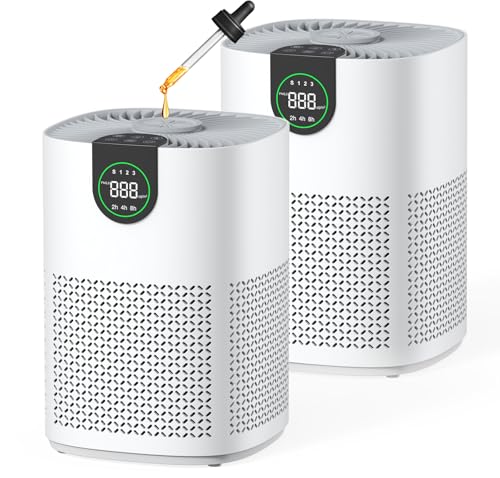 | Best for Multiple Rooms | Filtration Type: H13 HEPA 3-stage | Coverage: Up to 1,200 sq ft | Auto Mode: Yes | CHECK LATEST PRICE | Check Our Analysis |
| LUNINO Air Purifier for Large Rooms with HEPA Filter | 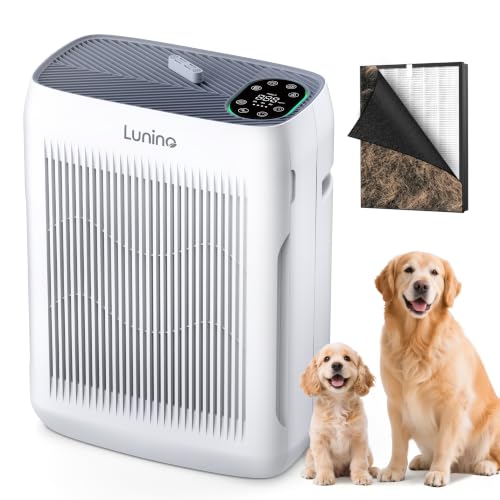 | Best for Large Spaces | Filtration Type: H13 HEPA 3-stage | Coverage: Up to 3,000 sq ft | Auto Mode: Yes | CHECK LATEST PRICE | Check Our Analysis |
| Large Room Air Purifier with H13 True HEPA | 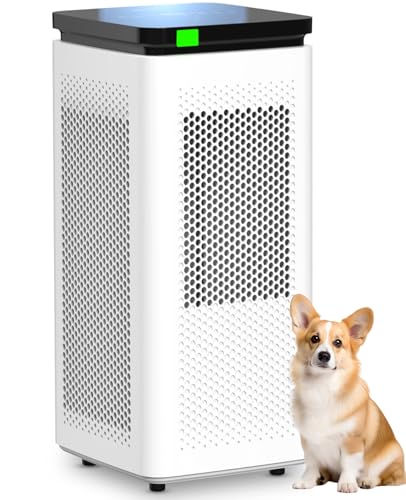 | Best for Large Rooms | Filtration Type: H13 True HEPA | Coverage: Up to 3,500 sq ft | Auto Mode: Not listed | CHECK LATEST PRICE | Check Our Analysis |
| PuroAir 100i Smart HEPA Air Purifier for Home |  | Best Smart Pick | Filtration Type: True HEPA 3-layer | Coverage: Up to 550 sq ft | Auto Mode: Not listed | CHECK LATEST PRICE | Check Our Analysis |
More Details on Our Top Picks
AEOCKY Large Room Air Purifier with Monitor
Should you want one purifier that balances power, efficiency, and smart control, AEOCKY stands out overall. You get a HEPA×YearChange filter that lasts up to five times longer than conventional filters, plus two washable pet pre-filters that trap dander fast. Its five-layer system cuts dust, pollen, smoke, VOCs, odors, and fine particles. Turbo mode pushes strong CADR performance for large rooms, while the AI monitor adjusts speed for you. You also save energy with Energy Star efficiency, low daily use, and a quiet Sleep Mode.
- Filtration Type:HEPA×YearChange 5-layer
- Coverage:Up to 2,300 sq ft
- Auto Mode:Yes
- PM2.5 Display:Air quality display
- Sleep Mode:Yes
- Timer:2/4/8 hours
- Additional Feature:HEPA×YearChange filter
- Additional Feature:Pet-specific washable pre-filters
- Additional Feature:Natural Breath Capsule
VEWIOR 2 Pack Air Purifiers for Large Rooms
Should you need cleaner air in multiple rooms, VEWIOR’s 2-pack fits the job. You can place these purifiers in your lounge room, bedroom, office, basement, or kitchen for fast coverage. Their 360° intake and rapid circulation refresh a 1200 ft² space up to 5 times an hour. The 3-stage system combines a washable pre-filter, H13 HEPA filter, and activated carbon to catch 99.97% of pollutants, pet hair, smoke, odors, and PM2.5. The sensor, auto mode, timer, child lock, sleep mode, and 15 dB operation help you save energy, stay safe, and rest better.
- Filtration Type:H13 HEPA 3-stage
- Coverage:Up to 1,200 sq ft
- Auto Mode:Yes
- PM2.5 Display:Real-time PM2.5
- Sleep Mode:Yes
- Timer:2/4/8 hours
- Additional Feature:2-pack purifiers
- Additional Feature:360° air intake
- Additional Feature:Aromatherapy pad
LUNINO Air Purifier for Large Rooms with HEPA Filter
Should you’re cleaning a big room, LUNINO’s H13 HEPA purifier covers up to 3,000 ft² with ease. You get 3-stage filtration that captures 99.97% of pet hair, smoke, PM2.5, odors, pollen, and dust, while the single-sided filter keeps costs lower and lasts longer. Its smart sensor shows real-time PM2.5 and auto mode tunes fan speed for you. Use Pet, Sleep, or Turbo modes, set a timer, and enjoy whisper-quiet 15dB operation. The washable pre-filter enhances efficiency, and the aroma diffuser, child lock, and certifications add extra value.
- Filtration Type:H13 HEPA 3-stage
- Coverage:Up to 3,000 sq ft
- Auto Mode:Yes
- PM2.5 Display:Real-time PM2.5
- Sleep Mode:Yes
- Timer:2/4/8 hours
- Additional Feature:Pet mode
- Additional Feature:External aroma diffuser
- Additional Feature:Smart filter reminder
Large Room Air Purifier with H13 True HEPA
Need cleaner air in a big space? This large room air purifier uses H13 True HEPA filtration to capture 0.1 μm particles with 99.97% efficiency, while the activated carbon filter helps reduce smoke, VOCs, and odors. You can use it in rooms up to 3500 ft², and its 235 CFM CADR moves air quickly through your home. It tackles dust, pollen, pet dander, pet hair, and everyday particulates. For quieter nights, switch to 30 dB sleep mode. The PM2.5 display helps you track air quality, so you can protect pets, smokers, and your family.
- Filtration Type:H13 True HEPA
- Coverage:Up to 3,500 sq ft
- Auto Mode:Not listed
- PM2.5 Display:PM2.5 display
- Sleep Mode:30 dB sleep mode
- Timer:Not listed
- Additional Feature:0.1 μm capture
- Additional Feature:235 CFM CADR
- Additional Feature:Smokers-friendly use
PuroAir 100i Smart HEPA Air Purifier for Home
When you want a smart pick for small rooms, the PuroAir 100i cleans up to 550 sq ft in an hour. You get quiet, energy-conscious performance examined in an ISO 17025 certified lab in 2025. Its 3-layer system uses a pre-filter, True HEPA filter, and activated carbon to trap up to 99.9% of dust, pollen, smoke, odors, and other pollutants. It’s great when you deal with pet dander or hair. Use the PuroAir App over Wi‑Fi to adjust fan speed and settings from your phone. You also get a 2-year warranty and USA-based support.
- Filtration Type:True HEPA 3-layer
- Coverage:Up to 550 sq ft
- Auto Mode:Not listed
- PM2.5 Display:Not listed
- Sleep Mode:Quiet operation
- Timer:Not listed
- Additional Feature:Wi-Fi app control
- Additional Feature:500X stronger filtration
- Additional Feature:American Lung Association partnership
Factors to Consider When Choosing Energy Efficient Air Purifiers
When you choose an energy efficient air purifier, check for Energy Star certification and a strong CADR efficiency ratio so you get solid cleaning power without wasting electricity. You should also weigh filter lifespan costs, auto mode sensors, and how much noise it makes at high speed, since those factors affect both performance and long-term value.
Energy Star Certification
Energy Star certification is a simple way to spot air purifiers that meet recognized energy-efficiency standards, so you can cut electricity use during long hours of operation. Whenever you choose a certified model, you’re more likely to lower long-term operating costs, especially whenever you run it every day. It also gives you a practical comparison point, because strong airflow or cleaning power doesn’t always mean higher energy use whenever the design is efficient. Check the label together with power draw, fan speed settings, and daily kWh figures to judge real-world efficiency. This matters even more for large-room purifiers, since they often work harder and benefit from efficient power use.
CADR Efficiency Ratio
A useful way to judge an air purifier’s efficiency is its CADR efficiency ratio, which shows how much clean air it delivers for each watt it uses. During you compare models, a higher CADR at the same wattage usually means better energy efficiency. Check separate CADR ratings for dust, smoke, and pollen, because one purifier can perform better on one pollutant than another. For example, a unit that reaches about 235–240 m³/h in turbo mode while using around 0.42 kWh per day at the highest setting shows strong output for its power draw. Don’t assume higher airflow always wins; noise, motor design, and filter resistance can lower efficiency. Compare CADR with coverage area and power use so you judge real-world performance fairly, not just lab numbers.
Filter Lifespan Costs
Filter efficiency matters, but the savings don’t stop at wattage. You should also weigh filter lifespan costs, because a low-price purifier can become expensive if you replace filters every 1–2 months. Look for extended-life filters that last longer and reduce recurring spending. Should a purifier have a washable pre-filter or reusable parts, you can cut how often you buy the main filter and lower maintenance costs. Multi-layer filtration can help too, since it often holds more dust and extends service life. Check for clear replacement alerts or lifespan estimates so you can budget ahead instead of facing surprise expenses. As you compare models, calculate total cost of ownership, not just the sticker price, because the cheapest unit upfront isn’t always the cheapest over time.
Auto Mode Sensors
Auto mode sensors can make an air purifier much more efficient because they continuously monitor indoor air quality and adjust fan speed as needed, so the unit isn’t wasting power at full blast while the air is already clean. You should look for sensors that react quickly and accurately, especially whenever you cook often, have pets, or deal with smoke. Better sensors help the purifier ramp up sooner when pollution spikes and dial back when air improves. A real-time PM2.5 display lets you verify that the system’s response matches the room’s conditions. Some models also use maintenance-free smart sensors, which can keep performance consistent without frequent cleaning. Once auto mode works well, you’ll save energy because the purifier only uses extra power when your air truly needs it.
Noise At High Speed
Even with smart auto mode sensors doing the heavy lifting, you still need to pay attention to how an air purifier sounds while it has to ramp up to top speed. A model that stays quiet on low or sleep mode can get noticeably loud when smoke, dust, or allergies demand maximum airflow. You’ll want a unit that balances airflow and acoustics, because some designs move more air without adding much noise. Check the decibel rating at full speed, especially when you plan to use it in bedrooms or shared living spaces. If you need high output often, choose one with efficient motors and smart airflow design. Multiple fan speeds also help you keep noise down most days and save the loudest setting for short bursts.
Coverage Per Watt
Coverage per watt is one of the best ways to judge an energy efficient air purifier, because it shows how much clean air you get for the electricity it uses. You want a model that delivers a high CADR without driving up daily energy use, since that usually means better filtration efficiency. In larger rooms, check that it can still achieve at least one air change per hour across the full space; that’s far more efficient than oversizing the fan just to meet the same target. Multi-speed purifiers can help too, letting you run lower settings for routine cleaning and save higher power for smoke or strong odors. Look for designs that move air well and filter effectively, so more of the wattage turns into useful clean air.
Standby Power Usage
After you’ve checked coverage per watt, look at standby power usage too, because an air purifier that sips electricity while idle can lower your total energy bill over the year. Once you leave it running in a bedroom, office, or large room all day, even a small idle draw adds up. Don’t assume auto mode or air quality sensors mean zero power use; display lights and controls can still consume electricity while the unit isn’t actively cleaning. Check the wattage the purifier pulls in standby, not just while it’s working hard. Features like timers, sleep mode, and automatic shutoff can trim wasted energy during times you don’t need full operation. Comparing idle use with active efficiency gives you a truer sense of what the purifier will cost you over time.
Maintenance And Replacement
Maintenance matters because a purifier only stays energy efficient while you keep it clean and replace parts on schedule. Choose models with washable pre-filters or reusable components so you can clean them regularly and delay pricey filter swaps. Check the rated filter lifespan and replacement interval; longer-lasting filters usually mean less work and lower ownership costs. Look for filter-change alerts or maintenance indicators, since they help you avoid running the unit with clogged filters that choke airflow and waste power. Also make sure replacement filters are easy to buy and fully compatible with your purifier, because missing parts can disrupt performance and add hassle. In practice, a unit that maintains strong airflow as filters age often uses less energy, because the fan doesn’t need to work harder for the same cleaning result.
Frequently Asked Questions
How Often Should I Replace the Air Purifier Filter?
Replace the air purifier filter every 3 to 12 months, based on how often you run it, the filter design, and the air in your home. Follow the manufacturer’s guidance, and replace it earlier if airflow weakens or odors come back.
Do Energy Efficient Air Purifiers Remove Odors Effectively?
Yes, odor removal works well when the purifier uses activated carbon and delivers strong airflow. Cheap units often perform poorly, so choose a purifier sized for your room and the strength of the smell.
Can I Run an Air Purifier All Night Safely?
Yes, you can run an air purifier overnight safely if you follow the manufacturer’s instructions, keep it away from curtains or bedding, and choose a certified model. This can help clean the air while you sleep.
What Room Size Needs a Higher CADR Rating?
Larger rooms, especially open plan spaces, require a higher CADR rating because air has to move farther. Small rooms can use a lower CADR, but square footage goes up, so should CADR.
Are Smart Air Purifiers Worth the Extra Cost?
Yes, if you will actually use the app and automation features. They can help you save energy, monitor air quality, and avoid running the purifier more than needed. If you will not check it regularly, the extra cost may not be worth it.
Wrap Up
In the end, choosing the best energy efficient air purifier isn’t just about using less power—it’s about getting more clean air for every watt. A smart unit with auto mode, like the models above, can cut wasted runtime and keep your bills in check. In fact, some energy efficient purifiers deliver strong room coverage while using as little electricity as a standard LED bulb, making better air feel surprisingly affordable.
