

Like a well-run relay, the best energy efficient pressure pool cleaners save power through moving smartly, not just quickly. You want models that match your pool’s plumbing, cover floors and walls well, and limit wasted pump time. From the XtremepowerUS and INTEX ZX100 to the Polaris MAXX, MAKHOON sweeper, and cordless robotic options, each has trade-offs that matter more than you may consider.
| XtremepowerUS Automatic Pool Cleaner Vacuum with Hose Set |  | Best Budget Cleaner | Cleaner Type: Automatic suction-side | Pool Type: In-ground/above-ground | Cleaning Coverage: Floor and walls | CHECK LATEST PRICE | Check Our Analysis |
| INTEX ZX100 Pressure-Side Automatic Pool Cleaner |  | Best Compact Pick | Cleaner Type: Pressure-side | Pool Type: Above-ground | Cleaning Coverage: Floor only | CHECK LATEST PRICE | Check Our Analysis |
| Polaris MAXX Automatic Suction Pool Cleaner | 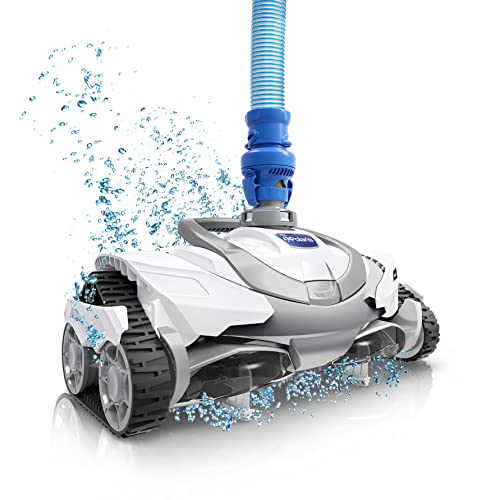 | Best Overall | Cleaner Type: Suction-side automatic | Pool Type: In-ground | Cleaning Coverage: Floor to waterline | CHECK LATEST PRICE | Check Our Analysis |
| MAKHOON Pool Pressure Side Sweeper with Four Wheels |  | Best for Older Pools | Cleaner Type: Pressure-side sweeper | Pool Type: In-ground | Cleaning Coverage: Full-pool coverage | CHECK LATEST PRICE | Check Our Analysis |
| Cordless Robotic Pool Cleaner for Inground Pools | Best Cordless Option | Cleaner Type: Cordless robotic | Pool Type: In-ground/above-ground | Cleaning Coverage: Floor, wall, waterline | CHECK LATEST PRICE | Check Our Analysis |
More Details on Our Top Picks
XtremepowerUS Automatic Pool Cleaner Vacuum with Hose Set
Should you want a budget-friendly cleaner, XtremepowerUS suits you well with its automatic suction-side design. You attach it to your existing filtration system, and it quietly sweeps in-ground or above-ground pools with hydraulic power. Its side-suction action climbs walls, tackles dirt and debris, and uses a wheel deflector to handle tight corners. The 30-foot hose set includes ten durable, scuff-resistant hoses that help protect surfaces. For best results, your pump should provide at least 1 HP or 1600 gallons per hour. Assembly is simple, and the adjustable weights improve cleaning efficiency.
- Cleaner Type:Automatic suction-side
- Pool Type:In-ground/above-ground
- Cleaning Coverage:Floor and walls
- Power Source:Pool pump
- Hose Length:30 ft
- Assembly:Required
- Additional Feature:Wall-climbing capability
- Additional Feature:Wheel deflector corners
- Additional Feature:Scuff-resistant hoses
INTEX ZX100 Pressure-Side Automatic Pool Cleaner
For above-ground pool owners, the INTEX ZX100 is a compact pick that keeps cleanup simple. You connect it to your pool inlet fitting, turn on the filter pump, and let pressure-side suction do the work. Its 21-foot non-tangle hose and swivel joint help it move smoothly, while oversized wheels guide it along an efficient path across the floor. You can use it in many INTEX and other above-ground pools up to 26-foot round or 36-by-12-foot rectangular sizes. It grabs leaves, dirt, sand, and bugs, and the removable debris tray makes cleanup easy.
- Cleaner Type:Pressure-side
- Pool Type:Above-ground
- Cleaning Coverage:Floor only
- Power Source:Filter pump
- Hose Length:21 ft
- Assembly:Included/ready
- Additional Feature:Oversized cleaning wheels
- Additional Feature:Removable debris tray
- Additional Feature:Non-tangle hose
Polaris MAXX Automatic Suction Pool Cleaner
Polaris MAXX stands out as a top overall choice for in-ground pools that need efficient, hands-off cleaning. You get a suction-side cleaner that works on every in-ground surface, scrubs floor to waterline, and tackles fine silt, sand, and larger debris. Its smart navigation and multi-directional movement help it climb better and cover more area. HALO technology keeps debris moving without clogging, while the hydraulic design uses lower flow rates to save energy. You don’t need assembly, and the replaceable brushes and two-year warranty add value and durability for long-term use.
- Cleaner Type:Suction-side automatic
- Pool Type:In-ground
- Cleaning Coverage:Floor to waterline
- Power Source:AC-powered
- Hose Length:39 ft
- Assembly:Not required
- Additional Feature:Active scrubbing brushes
- Additional Feature:HALO debris clearance
- Additional Feature:Multi-directional navigation
MAKHOON Pool Pressure Side Sweeper with Four Wheels
MAKHOON’s four-wheel pressure cleaner suits older pools with a dedicated inlet. You get the MPC2 pressure-side sweeper, and it needs a separate booster pump, a 1.5-inch female-thread inlet, a Universal Wall Fitting, and 4-bar pressure. Should your in-ground pool already have that setup, you’ll enjoy wider coverage, longer runs, and adjustable jet direction for thorough cleaning. Its four-wheel design helps it move well across different shapes and sizes. You’ll also appreciate the durable plastic build, easy upkeep, and portable hydraulic-powered design. Should hoses tangle, straighten them or tweak float spacing for smoother operation.
- Cleaner Type:Pressure-side sweeper
- Pool Type:In-ground
- Cleaning Coverage:Full-pool coverage
- Power Source:Booster pump
- Hose Length:Adjustable hose
- Assembly:Not required
- Additional Feature:Four-wheel design
- Additional Feature:Adjustable jet direction
- Additional Feature:Universal wall fitting
Cordless Robotic Pool Cleaner for Inground Pools
Whenever you need a cordless option that handles inground pools, this cleaner fits the job. You get a 180W brushless motor with 4,800 GPH suction, so it lifts twigs, sand, leaves, and stubborn scum. Its 4-in-1 modes clean the floor, walls, waterline, or every surface at once, while smart gyroscope route-planning and 4WD traction help it climb 90-degree walls and 30° slopes. It runs up to 180 minutes, recharges in about three hours, and suits pools up to 2,100 sq. ft. The top-loading 180μm filter makes cleanup quick and easy.
- Cleaner Type:Cordless robotic
- Pool Type:In-ground/above-ground
- Cleaning Coverage:Floor, wall, waterline
- Power Source:Rechargeable battery
- Hose Length:Cordless
- Assembly:Easy setup
- Additional Feature:180-minute runtime
- Additional Feature:Gyroscope navigation
- Additional Feature:4-in-1 cleaning modes
Factors to Consider When Choosing Energy Efficient Pressure Pool Cleaners
When you choose an energy efficient pressure pool cleaner, check your pump flow requirements and make sure the model matches your pool’s pressure-side efficiency. You’ll also want the right hose length and pool size compatibility so the cleaner can move freely and cover the entire area. Don’t overlook debris handling capacity, since it affects how well the cleaner keeps your pool clear.
Pump Flow Requirements
Pump flow matters more than horsepower alone while you choose a pressure-side cleaner. You should check the cleaner’s required flow rate before you buy, because pressure-side models can need about 1,600 gal/h to 2,100–3,500 gallons per minute equivalent flow for proper operation. Make sure your pump can deliver that minimum flow continuously; provided it can’t, suction drops, cleaning slows, and wall climbing suffers. Higher flow needs often mean higher energy use, so it’s smarter to match the cleaner to a pump that already meets the spec instead of upgrading to a bigger, less efficient one. Provided the model uses regulator valves or weights, use them only after your flow is in range. Compare stated requirements with your system’s actual output, not horsepower alone.
Pressure-Side Efficiency
Pressure-side pool cleaners can be a smart energy choice because they use your pool’s existing hydraulic power instead of relying on a separate high-wattage drive system. You should match the cleaner to your pump’s recommended flow, often around 1 HP or about 1,600 gal/h, so it cleans well without forcing your system to work harder than needed. Look for adjustable valves and well-aimed jets, since they help direct water efficiently and cut wasted pressure. A wide cleaning path, wheel- or turbine-driven motion, and wall-climbing ability let you cover more surface in each pass, which shortens cleaning time. You’ll also save energy whenever the unit moves smoothly, resists jams, and stays stable in corners and on walls, because it keeps working without interruptions.
Hose Length Matters
Another key to keeping a pressure cleaner efficient is hose length. You should choose a hose that reaches the farthest spot in your pool with a little slack, so the cleaner can move freely without losing coverage. If the hose’s too short, you’ll limit its reach and make the system work harder. For smaller above-ground pools, a 21-foot hose often cuts down on excess drag. Larger pools usually need 30- or 39-foot sets. Don’t add extra hose just to be safe, because too much length can cause tangles, loops, and slower movement that strain the pump. A 1.5-inch hose diameter helps maintain steady flow through the full length, and matching hose length to your pool’s shape keeps the cleaner moving smoothly.
Pool Size Compatibility
Pool size compatibility plays a big role in how well an energy-efficient pressure pool cleaner performs. You’ll want to match the cleaner to your pool’s dimensions, because some models work best in smaller above-ground pools, while others can handle larger in-ground pools up to about 2,100 sq. ft. Check that the unit suits your pool’s shape and depth, since coverage can differ for round, rectangular, shallow, and deeper pools. You should also confirm it can reach the surfaces you care about most; some cleaners focus on the floor, while others can climb walls and clean the waterline. Finally, make sure your pool doesn’t exceed the cleaner’s listed maximum size, including round or rectangular limits, so it moves properly and cleans thoroughly.
Debris Handling Capacity
Debris handling is a key part of choosing an energy-efficient pressure pool cleaner. You’ll get better results whenever the cleaner has a larger debris tray or filter area, because it can collect more leaves, sand, and dirt before you stop to empty it. Fine filtration matters too; a capture rating around 180 μm helps trap silt and fine sand, not just bigger debris. Match capacity to your pool’s mess level: whenever trees, grass, or wind dump extra debris into the water, you’ll need stronger handling than a lightly used pool. Look for smooth-flow designs that resist clogging, since blockages reduce performance and make the cleaner work harder. Bigger suction can help, but only if it doesn’t push your pump into wasteful overdrive.
Climbing And Coverage
When you want better energy efficiency, choose a pressure pool cleaner that can climb walls and reach the waterline, since that lets it cover more of the pool in a single run instead of leaving vertical surfaces untouched. You’ll also save power when the cleaner moves efficiently across the floor with multiple wheels, smart guidance, or adjustable jets that cut down wasted passes. Look for models that handle corners, slopes, and floor-to-wall shifts with wheel deflectors or multi-directional movement, because they clean more area without extra pump time. Should your pool be large or have an unusual shape, strong traction and steep-angle climbing matter even more. A cleaner that reaches stairs, walls, and uneven surfaces gives you broader coverage and better results.
Setup And Installation
To get the best energy savings, make sure the pressure cleaner fits your pool’s existing plumbing and inlet type, since some models need a dedicated 1.5-inch female-thread water inlet and a universal wall fitting. Next, check whether it runs from your main circulation pump or needs a separate surger pump, because that choice changes setup effort and power use. You should also verify the minimum flow rate before you buy; many pressure-side cleaners need about 1,600 gal/h or more to work efficiently. Match the hose length and layout to your pool’s size and shape so you don’t waste time repositioning it. Finally, choose a model with straightforward assembly and clear connection steps, since that makes installation easier and helps you avoid leaks or weak performance.
Durability And Maintenance
For long-term energy savings, pick a pressure cleaner built with sturdy plastic or reinforced parts so it can handle constant hydraulic use without wearing out quickly. You’ll get better value when the body resists cracks, and the moving parts stay solid under pressure. Choose models with replaceable brushes, hoses, and other wear items, because you can swap them out instead of replacing the whole unit. Look for cleaners that move debris smoothly and have adjustable water flow, since that helps prevent jams and tangles. Also check how easily you can rinse the filter or debris chamber; top-loading trays and removable bins make upkeep faster. Finally, favor designs with simple assembly, because fewer connection points mean less maintenance later.
Frequently Asked Questions
How Often Should I Replace Pressure Cleaner Hoses?
Replace pressure cleaner hoses every 3 to 5 years, or sooner if you notice cracks, leaks, stiffness, or reduced pressure. Check them each season, since wear can quickly lower cleaning performance and waste energy.
Do Pressure Pool Cleaners Work With Solar Heating Systems?
Yes, pressure pool cleaners can work with solar heating systems. You may need the plumbing arranged correctly and the pressure adjusted to match your setup. Check valves and an auxiliary pump can help maintain performance.
Can Pressure Cleaners Handle Large Debris Like Leaves?
Yes, many pressure cleaners can handle leaves if they have a large debris bag and strong suction. For very heavy piles, you should still scoop them by hand to avoid clogs and keep the machine working well.
How Do I Store a Pool Cleaner During Winter?
Winter’s chill means you should drain, rinse, and dry your pool cleaner, then store it indoors in a shaded, frost free place. This helps protect hoses and seals, so your pool cleaner stays in good shape through the off season.
Are Pressure Cleaners Safe for Vinyl Pool Liners?
Yes, pressure cleaners can be used on vinyl liners if you keep the pressure low, avoid rough or sharp parts, and check the wheels and hoses often. To protect the liner, clean with care, follow the maker’s instructions, and keep the cleaner in good condition.
Wrap Up
You’ve seen how the right pressure pool cleaner can cut waste while still covering every corner. But the real savings don’t come from power alone—they come from matching the cleaner to your pool, your plumbing, and your cleaning needs. Should you choose wisely, you won’t just spend less energy; you’ll also spend less time fighting debris. The best part? Once it’s running smoothly, you’ll ask yourself how you ever cleaned without it.
