

You just happened to compare two gas water heaters on the same day your hot water ran out, which made the choice feel a lot more urgent. Whenever you need fast, reliable hot water, the best options range from compact propane tankless units for camping and RVs to high-capacity natural gas models for busy homes, each with different pressure needs, flow rates, and safety features that can change everything whenever you least expect it.
| Tankless Propane Water Heater (5.26GPM 20L) | Best for Outdoors | Fuel Type: Propane (LPG) | Flow Rate: 5.26 GPM | Heat Output: 68,000 BTU | CHECK LATEST PRICE | Check Our Analysis | |
| CAMPLUX Portable Propane Tankless Water Heater (AY132B) |  | Best Compact Pick | Fuel Type: Propane | Flow Rate: 1.32 GPM | Heat Output: Not listed | CHECK LATEST PRICE | Check Our Analysis |
| Ranein Natural Gas Tankless Water Heater (8.5 GPM) |  | Best High-Output | Fuel Type: Natural gas | Flow Rate: 8.5 GPM | Heat Output: 190,000 BTU | CHECK LATEST PRICE | Check Our Analysis |
| Portable Propane Tankless Water Heater for RV Camping |  | Best for RVs | Fuel Type: Propane | Flow Rate: 1.58 GPM | Heat Output: 42,000 BTU | CHECK LATEST PRICE | Check Our Analysis |
| ORBEK Natural Gas Tankless Water Heater (4.3 GPM) | 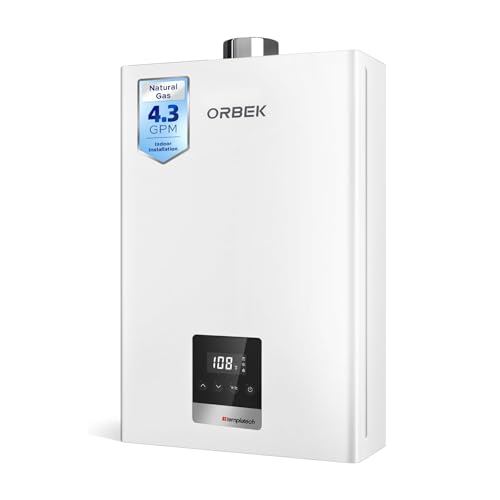 | Best for Homes | Fuel Type: Natural gas | Flow Rate: 4.3 GPM | Heat Output: 100,000 BTU | CHECK LATEST PRICE | Check Our Analysis |
More Details on Our Top Picks
Tankless Propane Water Heater (5.26GPM 20L)
Should you need hot water outdoors, this tankless propane heater fits camping, RV trips, and beach days. You get tankless LPG heating with 5.26 GPM flow, up to 68,000 BTU per hour, and a 167°F temperature rise. Its advanced combustion tech cuts gas use, lowers noise, and enhances efficiency by 11.5%. You also get CSA-approved safety protection, including flame failure, anti-freeze, and overheating safeguards. Check for gas leaks before use. Its compact body, 2 D-cell power, shower hose, holder, and spray head make setup easy for outdoor showers, pets, and portable sinks.
- Fuel Type:Propane (LPG)
- Flow Rate:5.26 GPM
- Heat Output:68,000 BTU
- Water Pressure:3.6 PSI start
- Safety Features:Flame failure, anti-freezing, overheating
- Installation Type:Portable outdoor
- Additional Feature:11.5% energy saving
- Additional Feature:2 D cell batteries
- Additional Feature:5-spray shower head
CAMPLUX Portable Propane Tankless Water Heater (AY132B)
If you need hot water off-grid, the CAMPLUX AY132B is a compact pick for you. You get a 10-pound propane unit with a folding handle, so you can carry it easily and set it up outdoors in about 10 minutes. It delivers 1.32 GPM, starts at just 3.0 PSI, and lets you adjust flow and temperature for a better shower. You also get CSA-approved safety with six protections, plus a shower head, gas regulator, hoses, and hardware. Drain it before storage and keep it dry.
- Fuel Type:Propane
- Flow Rate:1.32 GPM
- Heat Output:Not listed
- Water Pressure:3.0 PSI start
- Safety Features:6-in-1 protection
- Installation Type:Portable outdoor
- Additional Feature:Folding handle
- Additional Feature:10-minute setup
- Additional Feature:1-year guarantee
Ranein Natural Gas Tankless Water Heater (8.5 GPM)
Ranein’s 8.5 GPM tankless heater suits homes needing strong, on-demand hot water for multiple fixtures. You get up to 190,000 BTU of natural gas power, so you can run 4 to 6 outlets with fewer temperature swings. The indoor unit reaches 155°F, handles 116 PSI, and uses underside fans and an auto-adjusting blower to improve combustion and reduce smoke backflow. Its 24.25 x 15.08 x 8.07-inch wall-mount design fits tighter spaces, and the 120V unit includes a 2-year warranty. Note, it’s not recommended above 2,000 feet.
- Fuel Type:Natural gas
- Flow Rate:8.5 GPM
- Heat Output:190,000 BTU
- Water Pressure:116 PSI max
- Safety Features:Full combustion, smoke-backflow control
- Installation Type:Indoor wall mount
- Additional Feature:4-6 outlet points
- Additional Feature:Underbody fan placement
- Additional Feature:2-year warranty
Portable Propane Tankless Water Heater for RV Camping
With 1.58 GPM on demand, this propane heater suits RV campers who need quick hot water. You get a 6L, 42,000 BTU tankless unit that starts at just 2.5 PSI, so you won’t wait for preheating. Adjust heat and flow to match your shower, and the automatic ignition keeps operation simple. CSA-approved safety features include overheat, flame-out, anti-dry, anti-freezing, and high-pressure protection. Its lightweight, compact design, handle, and mounting bracket make it easy to carry, install, and use for camping, beach trips, boats, cabins, or outdoor pet washing.
- Fuel Type:Propane
- Flow Rate:1.58 GPM
- Heat Output:42,000 BTU
- Water Pressure:2.5 PSI start
- Safety Features:Overheat, anti-freeze, flame-out
- Installation Type:Portable wall mount
- Additional Feature:Digital display
- Additional Feature:Automatic ignition
- Additional Feature:24-month warranty
ORBEK Natural Gas Tankless Water Heater (4.3 GPM)
ORBEK’s 4.3 GPM tankless heater suits homes needing steady hot water for multiple fixtures. You get 100,000 BTUs, a 4.3 GPM max flow, and enough output for two to three outlets at once. The oxygen-free copper heat exchanger heats quickly, while the chip fine-tunes temperature 20,000 times per second to hold it within 1°F. You can set up to 149°F, and safety features guard against dry burning, leaks, flameout, and overheat. It’s CSA certified, wall-mounted, compact, quiet, and ideal for indoor homes, cottages, or apartments.
- Fuel Type:Natural gas
- Flow Rate:4.3 GPM
- Heat Output:100,000 BTU
- Water Pressure:150 PSI max
- Safety Features:Anti-dry, anti-overheat, anti-leakage
- Installation Type:Indoor wall mount
- Additional Feature:Smart remote control
- Additional Feature:1°F temperature stability
- Additional Feature:5-year heat exchanger warranty
Factors to Consider When Choosing Gas Water Heaters
When you choose a gas water heater, you’ll want to check fuel type compatibility, flow rate needs, and heating power output so it matches your home and usage. You should also look for safety protection features that help prevent problems and keep operation reliable. Don’t forget installation requirements, since the right setup can affect performance, cost, and ease of use.
Fuel Type Compatibility
Before you buy a gas water heater, make sure its fuel type matches what you already have on site, because propane-only units won’t run on natural gas and natural-gas units won’t run on LPG. Check the unit’s label for propane or natural gas, and don’t assume you can swap fuels without a proper conversion kit. Also verify whether the model is rated for indoor or outdoor installation, since ventilation and combustion rules can affect compatibility. Confirm the required gas pressure and regulator setup before you order, because the wrong combination can hinder ignition or create unsafe operation. Use only the connectors and regulator made for that fuel system, and match the heater’s fuel rating to your source so you avoid costly mistakes and safety issues.
Flow Rate Needs
To size a gas water heater correctly, match its maximum flow rate to how many fixtures you want running at the same time. If you usually run one shower, a model around 1.32 GPM might work. For multiple showers, sinks, or appliances, look for higher output, with some units providing 8.5 GPM and supporting 4–6 outlet points. Don’t ignore starting pressure, either; some heaters need only 2.5–3.6 PSI, while others can handle up to 145–150 PSI. Flow rate also affects how quickly water reaches usable temperature, so compare your real demand with the heater’s listed performance. Choose enough capacity for busy periods, but don’t oversize it, or you might waste energy when demand is low.
Heating Power Output
Heating power output is usually measured in BTU/hour, and the higher the rating, the faster a gas water heater can raise water temperature and maintain hot water for heavier demand. You should compare that rating with your daily use, because a shower needs far less power than simultaneous bathroom and kitchen demand. Look at maximum flow rate too; a unit that supports 5.26 GPM or 8.5 GPM can serve more outlets at once. Maximum temperature rise also matters, since it shows how much the heater can warm incoming cold water under real conditions. Even a lower-output model can work well, but solely provided it still delivers enough gallons per minute for your fixtures.
Safety Protection Features
Whenever you choose a gas water heater, safety protection features should be near the top of your checklist. You’ll want flame failure protection, or flame-out shutoff, so the gas supply stops automatically whenever the burner goes out. Look for overheat protection and a high-temperature cutoff, often around 167°F, to help prevent scalding and damage. Anti-freezing protection, such as drain plugs or drain procedures, can keep cold weather from cracking internal parts. Dry-burn protection and low-water-flow protection matter too, because they stop the heater whenever water flow drops too low. For extra peace of mind, choose units with high-water-pressure protection, leak protection, and a certified gas regulator, and check for gas leaks before every use.
Installation Requirements
Before you buy a gas water heater, make sure the installation setup matches your space and utilities. Check whether the unit is meant for indoor or outdoor use, because indoor models might need wall mounting, electrical power, and a vent or exhaust pipe. Outdoor units usually need only water and gas hookups. Next, verify the gas type and connection details. Some heaters run on propane, while others use natural gas, and the inlet fittings or regulators must match exactly. You should also confirm your water pressure meets the startup and operating range, since weak pressure can affect ignition and flow. Finally, make sure the location can handle the unit’s weight, mounting method, line access, and any electrical requirements for controls, ignition, or fans.
Portability And Size
Portability and size matter most when you need a gas water heater that’s easy to move, store, or fit into a tight space. You’ll want a compact unit with a lighter weight should you plan to transport it between sites or tuck it away once you’re done. Many portable models measure about 10 to 27 inches tall or long, so they can fit in RVs, cabins, boats, or other cramped areas. Look for folding handles or carry brackets should you need easier setup outdoors. Should you’d rather keep the unit in place, wall-mountable designs can free up floor space while still staying small. You should also check whether the heater can run on battery power, since that can help you avoid relying on fixed electrical hookups and keep your setup more flexible.
Water Pressure Range
Once you’ve narrowed down the right size and setup, check the water pressure range next, because a gas water heater has to match the pressure available at your site. You need to verify both the minimum start-up pressure and the full operating range before you buy. Some heaters ignite at just 2.5–3.6 PSI, while others need far more pressure to work properly. If your supply falls short, you may get weaker flow, unstable temperatures, or no ignition at all. Choose a model that fits your site’s lowest pressure, and don’t assume a high maximum rating solves the problem. A unit rated for up to 145–150 PSI can handle variable plumbing better, but only if it also starts reliably at your actual pressure.
Warranty And Support
If you compare gas water heaters, don’t overlook warranty and support, because they can save you time, money, and stress whenever something goes wrong. Check the warranty length at the outset: a 1- to 2-year warranty on the full unit is common, but longer coverage can lower your risk, especially if you run the heater hard every day. Pay close attention to separate coverage for the heat exchanger, since it’s often the most critical and costly part. You should also look for clear support promises, like a response within 24 hours, so you’re not waiting long whenever hot water stops. Manuals, installation guides, and assembly kits can make setup easier and help you solve problems faster.
Frequently Asked Questions
How Often Should Gas Water Heaters Be Serviced?
Schedule a professional service for your gas water heater once a year. If you notice sediment buildup, leaks, unusual sounds, or uneven water temperature, arrange maintenance right away. Regular upkeep helps maintain efficiency, lengthens the unit’s life, and lowers safety risks.
What Signs Indicate a Gas Water Heater Is Failing?
Watch for these gas water heater failure signs: water that turns cold unexpectedly, rusty or discolored water, popping or banging sounds, moisture around the tank, a pilot light that keeps going out, and utility bills that keep rising. If you smell gas or see corrosion, contact a professional right away.
Can Gas Water Heaters Work During Power Outages?
Yes, some gas water heaters still work when the power goes out, but many do not. Homes with gas can still lose hot water if the heater’s ignition, control board, or fan needs electricity. A standing pilot light, backup batteries, or a generator can keep some units running.
How Long Do Gas Water Heaters Usually Last?
A gas water heater typically lasts 8 to 12 years. With regular maintenance, clean water, and quick repairs, it may last longer. Tankless models often last around 20 years.
Are Gas Water Heaters Safe for Indoor Installation?
Yes, gas water heaters can be installed indoors if they are vented correctly. Without proper venting, carbon monoxide can build up. About 400 Americans die each year from accidental carbon monoxide poisoning, so install carbon monoxide detectors and have a qualified professional handle the installation.
Wrap Up
When you want hot water fast, the best gas water heaters give you instant comfort without the wait. Propane tankless models can start at just 2.5 to 3.0 PSI, making them ideal for camping and RVs, while higher-flow natural gas units can serve multiple fixtures at once. That’s a big plus whenever roughly 80% of homes using gas water heating value efficiency and quick recovery. Choose the one that fits your pressure, space, and daily demand.
