

If you want pool care to feel less like a chore, the right ground pool cleaner can change everything. You may prefer a simple manual kit for quick touch-ups, a cordless vacuum for easy spot cleaning, or a robotic model that handles heavier debris on its own. Each option solves a different problem, and the best choice depends on your pool, your schedule, and how much work you want to avoid.
| Sepetrel Deluxe Swimming Pool Cleaning Kit with Pole |  | Best Manual Kit | Power Source: Garden hose pressure | Pool Type: Above ground / inflatable | Cleaning Method: Manual kit | CHECK LATEST PRICE | Check Our Analysis |
| Cordless Pool Vacuum for Above Ground Pools | Best Cordless Option | Power Source: Rechargeable battery | Pool Type: Above ground / inground | Cleaning Method: Handheld vacuum | CHECK LATEST PRICE | Check Our Analysis | |
| XtremepowerUS Automatic Pool Cleaner with Wall Climb |  | Best Pressure Cleaner | Power Source: Hydraulic/pressure side | Pool Type: Inground / above ground | Cleaning Method: Automatic cleaner | CHECK LATEST PRICE | Check Our Analysis |
| WYBOT C1 Cordless Robotic Pool Vacuum for Inground Pools | Best Smart Robot | Power Source: Rechargeable battery | Pool Type: Inground | Cleaning Method: Robotic cleaner | CHECK LATEST PRICE | Check Our Analysis | |
| Cordless Robotic Pool Cleaner 180-Min Runtime Self-Parking | 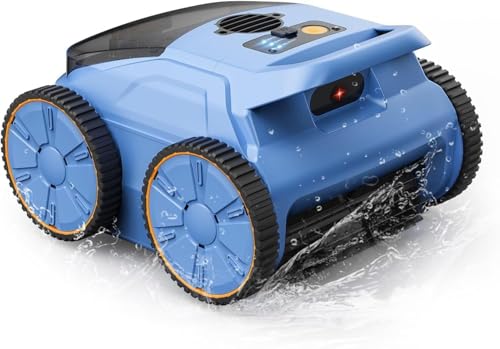 | Best Heavy-Duty Robot | Power Source: Battery powered | Pool Type: Above ground / inground | Cleaning Method: Robotic cleaner | CHECK LATEST PRICE | Check Our Analysis |
More Details on Our Top Picks
Sepetrel Deluxe Swimming Pool Cleaning Kit with Pole
Should you want a hands-on cleaner, this manual kit keeps your above-ground pool tidy without electricity. You get a spa jet vacuum, 13.5-inch brush, semi-deep skimmer net, and adjustable 57.5-inch pole in one four-piece set. The vacuum uses water pressure and an upgraded hose adapter to create a venturi effect that pulls leaves and debris into the bag. The curved brush reaches corners, while the half-depth net grabs more with each sweep. It’s ideal for inflatable and above-ground pools, and you can rinse it after use for easy care.
- Power Source:Garden hose pressure
- Pool Type:Above ground / inflatable
- Cleaning Method:Manual kit
- Surface Coverage:Floor / corners
- Debris Capture:Leaves / debris
- Handle/Reach:Adjustable pole
- Additional Feature:No electricity required
- Additional Feature:Semi-deep skimmer net
- Additional Feature:Curved-edge brush
Cordless Pool Vacuum for Above Ground Pools
When you want an easy, hands-free clean, this cordless vacuum gives you the most convenient pool care. You can use it in above ground pools, inground pools, spas, and hot tubs, and its 18.5 GPM suction lifts leaves, sand, dirt, and small debris fast. The cordless design removes tangled hoses, while the telescopic aluminum pole helps you reach floors, walls, steps, and corners without straining. Two brush heads tackle wide surfaces and tight edges, and the reusable filter bag rinses clean. A 12-volt lithium-ion battery recharges in 2.5 hours.
- Power Source:Rechargeable battery
- Pool Type:Above ground / inground
- Cleaning Method:Handheld vacuum
- Surface Coverage:Floor / walls / steps
- Debris Capture:Leaves / sand / dirt
- Handle/Reach:Telescopic pole
- Additional Feature:Reusable filter bag
- Additional Feature:2 interchangeable brush heads
- Additional Feature:IPX8 waterproof
XtremepowerUS Automatic Pool Cleaner with Wall Climb
XtremepowerUS suits you whenever you want a pressure-driven cleaner that climbs walls and tackles debris fast. You’ll attach it to your existing filtration system, set it up easily, and let the hydraulic, low-noise design do the work. It brings strong suction, cleans dirt and debris, and uses a wheel deflector to handle tight corners without jamming. You can use it in in-ground or above-ground pools, as long as your pump delivers at least 1 HP or 1600 gal/h. The kit includes a 30-foot hose set and durable suction hoses for efficient, energy-saving cleaning.
- Power Source:Hydraulic/pressure side
- Pool Type:Inground / above ground
- Cleaning Method:Automatic cleaner
- Surface Coverage:Walls / corners
- Debris Capture:Dirt / debris
- Handle/Reach:Hose set
- Additional Feature:Wall-climbing function
- Additional Feature:Pressure-side operation
- Additional Feature:30 ft hose set
WYBOT C1 Cordless Robotic Pool Vacuum for Inground Pools
The WYBOT C1 is a smart robot pick for inground pools, especially should you want hands-off cleaning. You get up to 3,038 GPH filtration, dual PVC brushes, and an 180μm filter that lifts leaves, sand, dirt, and fine debris. Its 4-in-1 design tackles the floor, walls, and waterline, while gyroscope guidance and 4WD help it grip tile, vinyl, fiberglass, pebble, mosaic, and glass-tile surfaces. It runs up to 150 minutes, recharges in four hours, and pairs with the WYBOT app so you can schedule cleanings, track progress, and update firmware.
- Power Source:Rechargeable battery
- Pool Type:Inground
- Cleaning Method:Robotic cleaner
- Surface Coverage:Floor / walls / waterline
- Debris Capture:Leaves / sand / dirt
- Handle/Reach:App control
- Additional Feature:Gyroscope-based navigation
- Additional Feature:OTA firmware updates
- Additional Feature:4WD traction system
Cordless Robotic Pool Cleaner 180-Min Runtime Self-Parking
Heavy-duty cleaning gets easier whenever you want a cordless robot that runs up to 180 minutes. You get strong suction from its 180W motor and 80GPH filtration, so it pulls in dirt, leaves, sand, hair, branches, and algae fast. Reinforced PVC brushes and a top-loading, large-capacity filter help you rinse it out quickly after each run. Track Drive and sonar routing map organized paths, while self-propulsion and wall climbing handle slopes up to 45°.
It parks itself at the edge, charges in 4 hours, and covers up to 2,000 sq. ft. per charge. App controls and LEDs keep you informed.
- Power Source:Battery powered
- Pool Type:Above ground / inground
- Cleaning Method:Robotic cleaner
- Surface Coverage:Floor / walls / inclines
- Debris Capture:Dirt / leaves / sand / algae
- Handle/Reach:Self-parking
- Additional Feature:Self-parking pickup
- Additional Feature:Sonar navigation
- Additional Feature:Climbs 45° inclines
Factors to Consider When Choosing a Ground Pool Cleaner
When you choose a ground pool cleaner, make sure it matches your pool type and the cleaning method you prefer. Check suction power and guidance features so it can handle debris and cover the pool well. You should also compare runtime and power to find a model that fits your cleaning needs.
Pool Type Compatibility
Before you buy a ground pool cleaner, make sure it’s built for your pool type—above-ground, inground, or both—because the wrong match can hurt performance or safe operation. You should also check your pool’s surface, since vinyl, fiberglass, tile, pebble, and mosaic finishes can affect traction and brush contact. Some cleaners handle floors, walls, and waterlines, while others can’t climb walls or manage stairs, so match the unit to the features you need cleaned. Look at depth and size limits too, because a cleaner with a short reach may miss large sections of your pool. If your setup uses a specific filtration or pressure system, confirm compatibility before you buy so the cleaner works properly and doesn’t strain your equipment.
Cleaning Method
The cleaning method you choose should match how much manual work you want to do and what kind of debris you need to handle. Should you not mind hands-on care, a handheld vacuum or brush works well for quick spot cleaning and light messes. For less effort, suction- and pressure-based cleaners use your pool’s water flow or hose pressure, so they can run without electricity, but they need compatible plumbing and steady circulation. Cordless electric vacuums and robotic cleaners give you more freedom, using rechargeable batteries and motors to move debris with less hose hassle. Robots also offer longer runtimes, often 150 to 180 minutes per charge, and can clean floors, walls, and waterlines. Match the method to your debris too: leaves, sand, and fine dirt each need different filtering or brushing.
Suction Power
Suction power matters because it determines how well your cleaner lifts heavier debris like leaves, sand, dirt, and algae, especially after storms or heavy pool use. Whenever you compare models, look at flow rate, since stronger cleaners can move from about 80 GPH to over 3,000 GPH depending on design. If you use a hose- or water-pressure-driven unit, higher water flow can create a venturi effect that pulls debris into the bag without electricity. You should also match suction with filtration, because fine filters around 180 μm catch smaller particles that weaker systems could miss. Keep in mind that clogged bags or filters can reduce suction fast, so empty or clean them regularly to keep performance steady and your pool cleaner working efficiently.
Navigation Features
How a cleaner moves can matter as much as how hard it pulls. You’ll get better results once you match routing to your pool’s shape. Gyroscope, sonar, and path-guided systems usually cover water more efficiently than random roaming, so they’re worth a look for irregular layouts. Should your pool has deep walls, choose a model with wall-climbing ability so it can lift debris from vertical surfaces; otherwise, floor-only designs may be enough. For tight corners, wheel deflectors or dedicated corner brush heads help reach edges more cleanly. In larger pools, full-pool coverage matters, especially models that can handle about 1,614 to 2,000 square feet per cycle. Self-parking or easy pickup also makes retrieval simpler, particularly with cordless cleaners.
Runtime and Power
Runtime and power matter because they decide whether a cleaner can handle the debris you deal with most often. You should match suction and filtration strength to the mess you see most, whether that’s leaves, sand, fine dirt, or algae. Stronger motors and higher flow rates usually clean more effectively, especially when debris is stubborn or fine. Should you be choosing a cordless model, check the battery life first; 150 to 180 minutes helps it cover more of your pool before it needs a recharge. Charging time matters too, and a unit that tops up in about 2.5 to 4 hours gets back to work sooner. For larger pools, look for higher coverage ratings, since some cleaners handle about 1,614 to 2,000 square feet per charge.
Debris Capacity
Debris capacity tells you how much dirt, leaves, sand, or fine debris your cleaner can collect before you need to empty or rinse it. If you deal with heavy leaf fall or storm mess, choose a model with a larger filter bag or collection chamber so you’re not stopping every few minutes. A cleaner that holds only a few pounds of debris may need frequent emptying, while a high-volume unit can handle longer cleaning sessions. Also look at the filter type. Fine-mesh and ultra-fine filters trap small particles like sand and dirt better, but they can clog faster and need regular rinsing to keep suction strong. Match both capacity and debris type to your pool’s typical cleanup load, and you’ll get more consistent results.
Ease of Use
Once you’ve narrowed down debris capacity, look at how easy the cleaner is to live with day to day. You’ll save time if it needs little or no assembly, so you can get cleaning fast without extra prep. Cordless or hose-free models are simpler to manage because they won’t snag, drag, or limit your movement around the pool. A lightweight cleaner with a telescopic or adjustable pole is easier to steer and puts less strain on your back and shoulders. Useful extras like push-button operation, self-parking, or app control can also make the job feel less effortful. Finally, choose a unit with an easy-to-empty filter bag or top-loading debris container so you don’t have to stop often.
Maintenance Needs
Maintenance needs can make a big difference in how convenient a ground pool cleaner is over time. You’ll save effort when you choose a model with easy-to-rinse filters or debris bags, since reusable filtration helps you maintain suction without extra hassle. Check how often you’ll need to empty the collection system; larger bags or top-loading filters usually cut interruptions and keep cleaning moving. You should also inspect how easily you can clean hoses, brushes, and adapters after each run, because leaves, sand, and grime can build up fast. Should you’re considering a battery-powered cleaner, bear in mind charging, storage, and periodic checks. Finally, pick a durable design with minimal parts to assemble or replace, so you face fewer wear points and less upkeep in general.
Frequently Asked Questions
How Often Should I Clean My Pool Filter?
Clean your pool filter every 4 to 6 weeks. Check it each week, and clean it sooner if the pressure goes up, the water looks cloudy, or debris collects fast.
Can Pool Cleaners Remove Algae Buildup Effectively?
Yes, pool cleaners can remove algae buildup effectively, but brushing and the right chemicals are also necessary. Automated cleaners help, yet stubborn algae often requires extra scrubbing and filtration.
Do Ground Pool Cleaners Work on Vinyl Liners?
Yes, many ground pool cleaners can be used on vinyl liners if they have soft brushes and mild suction. Avoid abrasive parts because they can scratch or damage the liner.
What Maintenance Do Robotic Pool Cleaners Need?
Empty and rinse the filter basket after each cleaning, inspect the brushes and tracks for wear, untwist the cable if it becomes tangled, and check the power supply for damage. Clean the sensors from time to time and store the unit in a dry place after use.
Are Pool Cleaners Safe for Saltwater Pools?
Yes, pool cleaners work in saltwater pools when the model is built for salt exposure and the unit is rinsed after each use. This helps prevent corrosion, keeps the cleaner operating well, and extends its service life.
Wrap Up
Choosing the best ground pool cleaner comes down to your pool’s size, debris load, and how much effort you want to spend. You can keep maintenance simple with a manual kit, or save time with a cordless vacuum or robotic cleaner that handles bigger jobs. One helpful stat: robotic pool cleaners can cut cleaning time up to 70%, giving you more time to enjoy your pool and less time scrubbing it.
