

The best pool shock depends on your pool’s water, algae level, and how fast you want to swim again. Chlorine shocks clean up cloudy water fast and kill stubborn bacteria.
Non-chlorine options work better for quick swims and lighter cleanup. The eight picks below cover strong sanitizing power, fast recovery, and gentler choices for different pools.
| Aqua Clear Pool Products Pool Shock 24×1 lb. |  | Best All-Around | Active Ingredient: Calcium hypochlorite | Pack Size: 24 x 1 lb | Form: Granular | VIEW LATEST PRICE | Read Our Analysis |
| Rx Clear Mega Shock Calcium Hypochlorite Pool Sanitizer |  | Best Fast-Acting | Active Ingredient: Calcium hypochlorite | Pack Size: 24 x 1 lb | Form: Granular powder | VIEW LATEST PRICE | Read Our Analysis |
| Doheny’s Chlorine-Free Oxidizing Shock (24 x 1lb Bags) |  | Best Chlorine-Free | Active Ingredient: Potassium monopersulfate | Pack Size: 24 x 1 lb | Form: Fast-dissolving granular | VIEW LATEST PRICE | Read Our Analysis |
| GLB 23224-24 Calcium Hypochlorite Pool Shock 1-Pound 24-Pack |  | Best Value | Active Ingredient: Calcium hypochlorite | Pack Size: 24 x 1 lb | Form: Granular | VIEW LATEST PRICE | Read Our Analysis |
| POOL SHARK Calcium Hypochlorite Pool Shock (50 lb) | 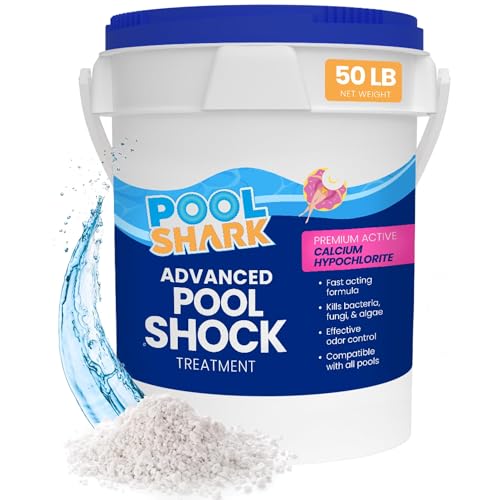 | Best Bulk Option | Active Ingredient: Calcium hypochlorite | Pack Size: 50 lb bucket | Form: Granular | VIEW LATEST PRICE | Read Our Analysis |
| Poolife Rapid Shock for Pool Water Cleanup |  | Best For Routine Care | Active Ingredient: Calcium hypochlorite | Pack Size: 24 x 1 lb | Form: Granular | VIEW LATEST PRICE | Read Our Analysis |
| Poolife Turbo Shock Calcium Hypochlorite Pool Shock (25 lb) | 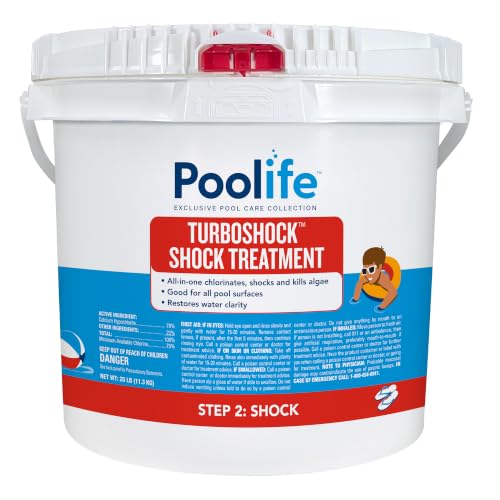 | Most Powerful | Active Ingredient: Calcium hypochlorite | Pack Size: 25 lb bucket | Form: Granular | VIEW LATEST PRICE | Read Our Analysis |
| Poolife Rapid Shock Calcium Hypochlorite Pool Shock |  | Best For Weekly Use | Active Ingredient: Calcium hypochlorite | Pack Size: 6 x 1 lb | Form: Fast-dissolving granular | VIEW LATEST PRICE | Read Our Analysis |
More Details on Our Top Picks
Aqua Clear Pool Products Pool Shock 24×1 lb.
Provided that you want a straightforward, fast-acting shock that helps keep your water clear, Aqua Clear Pool Products Pool Shock 24×1 lb. is a solid fit for regular pool owners. You get 24 one-pound granular doses, so you can treat your pool weekly or after heavy swimmer use, pets, or rain. It kills bacteria, removes contaminants, clears cloudy water, and helps control algae while enhancing your regular sanitizer. Because it works in all pool types and uses manual application, you can keep maintenance simple. BioLab, Inc. makes it, and retailer returns and manufacturer support add peace of mind.
- Active Ingredient:Calcium hypochlorite
- Pack Size:24 x 1 lb
- Form:Granular
- Pool Type:All pool types
- Algae Control:Kills algae
- Usage Frequency:Weekly
- Additional Feature:Kills bacteria fast
- Additional Feature:Clears cloudy water
- Additional Feature:Enhances sanitizer effectiveness
Rx Clear Mega Shock Calcium Hypochlorite Pool Sanitizer
Rx Clear Mega Shock is a strong pick should you want a fast-acting chlorine booster for routine maintenance or a heavier cleanup. You get 73% calcium hypochlorite in 1-pound bags, and the 24-pack gives you enough product for multiple treatments. Use it as a sanitizer, clarifier, and algicide in above-ground or in-ground pools, spas, and hot tubs. Pre-dissolve the granules in a bucket first, then add them to the water. For maintenance, use 1 lb per 10,000 gallons; for algae or opening, use 2 lbs per 14,000 gallons. Add it at night and wait 8–10 hours before swimming.
- Active Ingredient:Calcium hypochlorite
- Pack Size:24 x 1 lb
- Form:Granular powder
- Pool Type:Above-ground/in-ground pools, spas, hot tubs
- Algae Control:Algicide
- Usage Frequency:Maintenance/opening
- Additional Feature:73% chlorine strength
- Additional Feature:Pre-dissolve before use
- Additional Feature:Swim after 8–10 hours
Doheny’s Chlorine-Free Oxidizing Shock (24 x 1lb Bags)
Doheny’s Chlorine-Free Oxidizing Shock in 24 one-pound bags is the best pick should you desire a fast-acting, chlorine-free shock that keeps routine pool care simple. You get a granular potassium monopersulfate formula that dissolves quickly and attacks chloramines before they cloud your water. It also helps enhance free chlorine and oxidize spent compounds, so your pool feels fresher. Use 1 lb per 10,000 gallons, then wait just 15 minutes to swim. The 24-bag pack gives you convenient, long-lasting supply for regular maintenance without complicated dosing.
- Active Ingredient:Potassium monopersulfate
- Pack Size:24 x 1 lb
- Form:Fast-dissolving granular
- Pool Type:Regular pool use
- Algae Control:Oxidizes chloramines
- Usage Frequency:As needed
- Additional Feature:Potassium monopersulfate formula
- Additional Feature:Swim-ready in 15 minutes
- Additional Feature:Eliminates chloramines quickly
GLB 23224-24 Calcium Hypochlorite Pool Shock 1-Pound 24-Pack
GLB 23224-24 Calcium Hypochlorite Pool Shock is a strong pick should you want fast-acting chlorine in convenient 1-pound packets that won’t add cyanuric acid or leave residue behind. You get 73% cal hypo in a 24-pack, so it sanitizes, clarifies, shocks, and helps prevent algae with little fuss. Each dose can deliver 5 to 10 ppm of available chlorine per 10,000 gallons whenever you use 9 to 18 ounces. Keep your pH at 7.2 to 7.6 and alkalinity at 60 to 120 ppm for best results.
- Active Ingredient:Calcium hypochlorite
- Pack Size:24 x 1 lb
- Form:Granular
- Pool Type:All pool surfaces
- Algae Control:Prevents/controls algae
- Usage Frequency:Routine use
- Additional Feature:No cyanuric acid
- Additional Feature:Leaves no residue
- Additional Feature:Maintains water balance
POOL SHARK Calcium Hypochlorite Pool Shock (50 lb)
Should you want a heavy-duty shock that works fast and comes in a bulk supply, POOL SHARK 68% Calcium Hypochlorite Pool Shock (50 lb) is a strong pick for 2026. You get a fast-dissolving granular chlorine that elevates levels instantly, kills algae and bacteria, and clears cloudy water after storms or heavy use. Because it’s non-stabilized, you won’t add cyanuric acid or risk chlorine lock. You can use it in inground, above ground, saltwater pools, spas, and hot tubs. The 50-pound bucket gives you plenty for routine upkeep and tougher cleanup jobs.
- Active Ingredient:Calcium hypochlorite
- Pack Size:50 lb bucket
- Form:Granular
- Pool Type:Inground/above ground/saltwater/spas/hot tubs
- Algae Control:Kills algae
- Usage Frequency:Routine maintenance
- Additional Feature:68% calcium hypochlorite
- Additional Feature:Reduces chlorine odor
- Additional Feature:Non-stabilized formula
Poolife Rapid Shock for Pool Water Cleanup
Poolife Rapid Shock is a strong pick should you want fast pool cleanup without adding cyanuric acid, since its calcium hypochlorite granules dissolve instantly and help restore chlorine after heavy use, storms, or algae. You get pre-measured 1 lb bags in a 24-bag set, so dosing stays simple. Use 9–16 ounces per 10,000 gallons weekly to keep free chlorine near 5–10 ppm. It clears bacteria, enhances water clarity, and leaves no residue. It’s safe for in-ground, above-ground, vinyl, plaster, and fiberglass pools, helping you avoid cloudy water and chlorine lock.
- Active Ingredient:Calcium hypochlorite
- Pack Size:24 x 1 lb
- Form:Granular
- Pool Type:All pool types
- Algae Control:Clears algae
- Usage Frequency:Weekly
- Additional Feature:Instant dissolution
- Additional Feature:No residue
- Additional Feature:CYA-free formula
Poolife Turbo Shock Calcium Hypochlorite Pool Shock (25 lb)
Should you want a powerful, fast-acting shock that can clear cloudy water, kill algae, and tackle bacteria in one step, Poolife Turbo Shock Calcium Hypochlorite Pool Shock (25 lb) is a strong pick for 2026. You get 78% calcium hypochlorite in fast-dissolving granules that work without pre-mixing, so you can restore clarity quickly. Use about 1 lb per 10,000 gallons weekly for all-in-one chlorination, oxidation, and algae control. It’s safe for vinyl, plaster, fiberglass, saltwater, and traditional pools, and it won’t add cyanuric acid or cause chlorine lock.
- Active Ingredient:Calcium hypochlorite
- Pack Size:25 lb bucket
- Form:Granular
- Pool Type:All pool surfaces/types
- Algae Control:Controls algae
- Usage Frequency:Weekly
- Additional Feature:78% calcium hypochlorite
- Additional Feature:Strongest pool shock
- Additional Feature:No pre-mixing required
Poolife Rapid Shock Calcium Hypochlorite Pool Shock
Should you want a fast-acting shock that clears cloudy water, kills algae, and won’t add cyanuric acid to your pool, Poolife Rapid Shock is a strong pick for 2026. You get fast-dissolving calcium hypochlorite in pre-measured 1 lb bags, so dosing stays simple. Its 78% active ingredient and 75% available chlorine help you sanitize quickly after storms, heavy use, or visible algae. You can use it in vinyl, plaster, fiberglass, above-ground, or in-ground pools. Add it at night with the pump running, then test, brush on the off chance, and keep pH between 7.2 and 7.6.
- Active Ingredient:Calcium hypochlorite
- Pack Size:6 x 1 lb
- Form:Fast-dissolving granular
- Pool Type:Above-ground and in-ground
- Algae Control:Clears algae
- Usage Frequency:Every 7 days
- Additional Feature:75% available chlorine
- Additional Feature:Evening application
- Additional Feature:Broadcast over deep area
Factors to Consider When Choosing Pool Shock
Once you choose pool shock, check the active ingredient strength and decide whether chlorine or non-chlorine fits your pool and goals. You’ll also want to match the shock type to your pool system and calculate the right dosage for your pool volume. Finally, consider how fast it dissolves, since that affects how quickly you can get back in the water.
Active Ingredient Strength
Active ingredient strength is what tells you how hard a shock will hit, so you need to match the product to the job you’re trying to do. Check the label for the percent active ingredient, because that number drives how much product you’ll need. Calcium hypochlorite shocks usually run about 68–78% available chlorine, so they can raise free chlorine fast with fewer pounds per 10,000 gallons. That makes dosing calculations easier when you know the strength. Very strong products can also enhance alkalinity and might bleach spots should you not pre-dissolve them. Non-chlorine oxidizers use oxidizing power instead of chlorine percent, so they clean up contaminants without much chlorine increase. In case you require a big chlorine spike, choose a stronger formula; should you only require oxidation, don’t overbuy.
Chlorine Versus Non-Chlorine
Chlorine and non-chlorine shocks solve different problems, so the best choice depends on what your pool needs right now. In case you’re fighting algae or need to raise sanitizer fast, pick a chlorine shock such as calcium hypochlorite or sodium dichlor. It can add 5–10 ppm available chlorine, kill contaminants, and also oxidize debris, though you might require several hours to a day before swimming again. Should you want to clear chloramines, burn off bather waste, or get back in the water quickly, choose a potassium monopersulfate shock. It oxidizes fast and usually lets you swim in about 15 minutes, but it won’t increase free chlorine. Also, repeated stabilized chlorine use can build cyanuric acid, while many calcium hypochlorite shocks don’t add any.
Shock Type Compatibility
Beyond choosing chlorine or non-chlorine, you also need to match the shock to your pool’s chemistry and setup. Should you want fast chloramine cleanup and can swim again in about 15 minutes, pick oxidizing non-chlorine shock with potassium monopersulfate. In case you need a bigger chlorine lift and stronger algae or bacteria kill, use calcium hypochlorite; it’s highly active, non-stabilized, and can increase calcium hardness. Opt for stabilized chlorine shock only whenever you need UV protection for free chlorine, since it also raises cyanuric acid and can cause chlorine lock. Check that the product suits your pool surface and system, because some formulas can damage vinyl, plaster, fiberglass, or disrupt salt chlorinators.
Pool Volume Dosage
Once it comes to pool shock, dosage starts with grasping your pool’s exact volume, since most products are labeled per 10,000 gallons. Measure your pool precisely with length × width × average depth for rectangular pools, or use the right geometric formula, then match the label rate. For routine upkeep, many granular shocks call for about 1 lb per 10,000 gallons, so you’d use 0.5 lb for 5,000 gallons or 2 lbs for 20,000 gallons. Should you’re treating algae or opening the pool, follow the stronger directions and raise the dose to about 1.5–2× maintenance. High bather loads, heat, rain, and debris can also push you to dose more often. Always check safe chlorine levels before swimming.
Dissolving Speed
Dissolving speed matters because it affects how quickly you can get back in the water and how evenly the shock works throughout the pool. Faster-dissolving oxidizing shocks can be swim-ready in as little as 15 minutes, while stabilized calcium hypochlorite granules might need 30 minutes to several hours. You can speed things up through pre-dissolving granular shock in a bucket, which also helps keep particles from settling on the floor or scuffing liners. Warm water and good circulation from your pump or return jets help the product spread faster. Choose fine, fast-dissolving granules or liquid oxidizers should you want quicker action. Slow, coarse granules can linger longer and should never touch vinyl or painted surfaces directly.
Water Balance Impact
How a shock dissolves is only part of the decision; you also need to contemplate how it affects your water chemistry. Should you use calcium hypochlorite, you’ll add calcium, which can push hardness up and encourage scale in already hard water. Granular non-chlorine oxidizers, like potassium monopersulfate, won’t add chlorine or calcium, so they clean up contaminants without changing hardness or cyanuric acid. Some shocks also nudge pH and total alkalinity higher, so you should test after treatment and bring pH back to 7.2–7.6. Repeated unstabilized chlorine shocks can swing free chlorine levels and affect your sanitizer plan. Always measure your pool volume and dose carefully, because too much or too little shock can upset chlorine, pH, alkalinity, and hardness targets.
Surface Safety
Whenever it comes to surface safety, you’ll want to match the shock to your pool’s finish and follow the label closely. Check whether the product uses calcium hypochlorite or a gentler oxidizer, because calcium-based formulas can raise hardness and total dissolved solids over time, leading to scale or etching on delicate surfaces. Make sure the manufacturer says it’s safe for vinyl, plaster, fiberglass, painted, or pebble finishes, since some high-chlorine shocks can discolor or weaken them. You should also dilute it as directed and distribute it evenly, not dump it in one spot, so you don’t bleach liners or pit plaster. After treatment, keep an eye on chlorine levels and hardness, especially should you use high-calcium shock repeatedly, since buildup can leave mineral deposits and fade colored liners.
Application Timing
For best results, you should shock your pool in the evening or at night so sunlight doesn’t burn off chlorine before it has time to work. That gives the treatment more time to sanitize while swimmers are out of the water. Before you add shock, check that your pH is between 7.2 and 7.6 so the product works efficiently. After dosing, keep everyone out until the recommended blackout period ends: usually 8–10 hours for chlorine shock, or as little as 15 minutes for non-chlorine oxidizers. Shock right after heavy use, rain, or visible debris to restore free chlorine fast. For routine care, plan weekly shocks whenever your filter pump can run for several hours, helping the chemicals circulate evenly and do their job.
Frequently Asked Questions
How Often Should I Shock My Pool in Winter?
Shock your pool every 2 to 4 weeks during winter, and more often after heavy rain or frequent use. Since most pool issues begin with unbalanced water, test the water each week and make corrections right away.
Can I Swim Immediately After Shocking the Pool?
No, do not swim right after shocking your pool. Wait until the chlorine level returns to a safe range, often about 24 hours, and test the water before getting in.
Do Pool Shocks Expire if Stored Unopened?
Yes, unopened pool shock can expire, so do not assume it stays effective forever. For the best results, store it in a cool, dry place with the container tightly sealed, and check the label date before using it.
Which Shock Works Best for Saltwater Pools?
Calcium hypochlorite shock is often the strongest choice for saltwater pools because it acts quickly and raises chlorine fast. Use it only when needed, follow the instructions for your salt chlorinator, and skip stabilized shock products that can increase cyanuric acid.
How Should I Store Pool Shock Safely?
Store pool shock in its original container with the lid sealed tight, and keep it in a cool, dry place out of sunlight. Put it away from moisture, metals, fuels, and children, and read the label carefully.
