

Portable power stations can be a practical backup power choice in 2026. They’re handy for camping, outages, and everyday charging.
The best models balance size, battery life, and fast charging.
This guide compares compact LiFePO4 units, expandable mid-range picks, and larger 2,048Wh stations so you can choose the right one.
| VTOMAN Jump 600X Portable Power Station 600W | Best for Emergencies | Power Source: LiFePO4 battery | Capacity: 299Wh | Output Power: 600W continuous | VIEW LATEST PRICE | Read Our Analysis | |
| GRECELL Portable Power Station 300W 288Wh Lithium Battery | 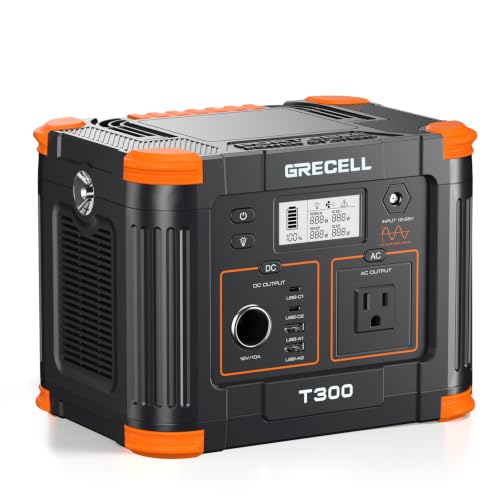 | Budget-Friendly Pick | Power Source: Lithium battery | Capacity: 288.6Wh | Output Power: 300W continuous | VIEW LATEST PRICE | Read Our Analysis |
| BLUETTI Elite 30 V2 Portable Power Station |  | Best Compact Option | Power Source: LiFePO4 battery | Capacity: 288Wh | Output Power: 600W continuous | VIEW LATEST PRICE | Read Our Analysis |
| AFERIY 2048Wh Portable Power Station (P210) |  | Best High-Capacity | Power Source: LiFePO4 battery | Capacity: 2048Wh | Output Power: 2400W continuous | VIEW LATEST PRICE | Read Our Analysis |
| Anker SOLIX C2000 Gen 2 Portable Power Station | 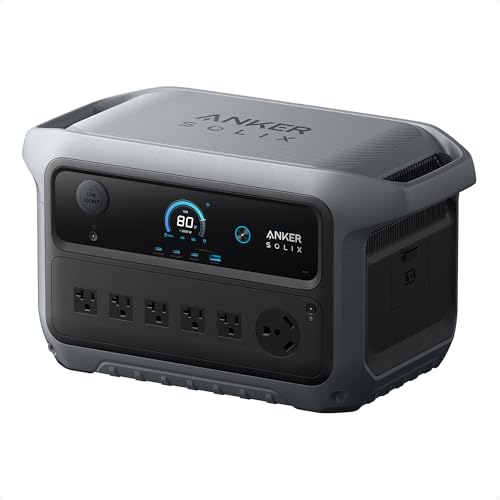 | Best Premium Pick | Power Source: LiFePO4 battery | Capacity: 2048Wh | Output Power: 2400W rated | VIEW LATEST PRICE | Read Our Analysis |
| Baseus Blade 140W 6-in-1 USB-C Charging Station | 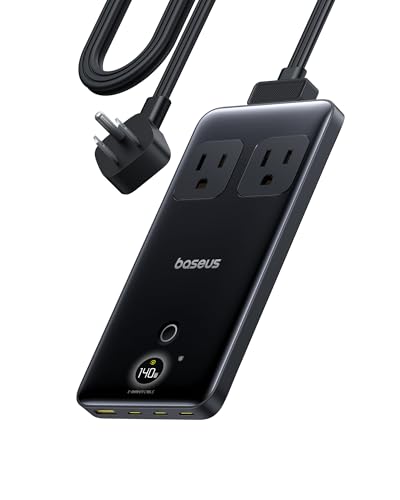 | Best Desktop Charger | Power Source: AC-powered GaN charger | Capacity: 140W | Output Power: 140W total | VIEW LATEST PRICE | Read Our Analysis |
| SOKIOVOLA 200W Portable Foldable Solar Panel for Power Stations | 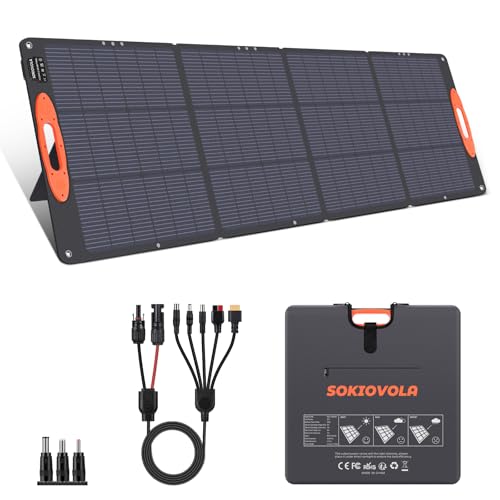 | Best Solar Panel | Power Source: Solar panel | Capacity: 200W | Output Power: 200W | VIEW LATEST PRICE | Read Our Analysis |
| Champion 2500-Watt Dual Fuel Portable Inverter Generator |  | Best Dual Fuel | Power Source: Gasoline/propane | Capacity: 2500W | Output Power: 1850W running | VIEW LATEST PRICE | Read Our Analysis |
More Details on Our Top Picks
VTOMAN Jump 600X Portable Power Station 600W
Should you want a compact power station that does more than keep phones and laptops alive, the VTOMAN Jump 600X is a smart pick for you, especially should you camp, travel in an RV, or need roadside backup for a truck, SUV, or car. You get a 299Wh LiFePO4 battery with 3,000 cycles, plus jump-start support with separate cables. It delivers 600W continuous output, 1,200W surge, and keeps running even with brief overdraws. You can charge nine devices at once, use pass-through charging, and expand capacity to 939Wh. Refill it via wall, car, or solar power.
- Power Source:LiFePO4 battery
- Capacity:299Wh
- Output Power:600W continuous
- Charging Method:Wall/solar/car
- Port Count:9 ports
- Portability:Portable
- Additional Feature:Jump-start capability
- Additional Feature:LiFePO4 battery
- Additional Feature:Pass-through charging
GRECELL Portable Power Station 300W 288Wh Lithium Battery
In case you want a compact backup power station that can handle everyday essentials without taking up much space, the GRECELL EB300 stands out with its 288.6Wh battery, 300W pure sine wave AC output, and 60W USB-C charging. You can power a laptop, phone, lights, and small gear through its AC outlet, three USB-A ports, DC outputs, wireless pad, and car port. It recharges in about 6 to 7 hours from a wall outlet, or 5 to 9 hours with a 100W solar panel. Its BMS, quiet fans, and SOS flashlight add useful protection and convenience.
- Power Source:Lithium battery
- Capacity:288.6Wh
- Output Power:300W continuous
- Charging Method:Wall/solar/car
- Port Count:9 ports
- Portability:Portable
- Additional Feature:Wireless charging pad
- Additional Feature:Dual cooling fans
- Additional Feature:SOS flashlight mode
BLUETTI Elite 30 V2 Portable Power Station
The BLUETTI Elite 30 V2 Portable Power Station is a smart pick should you want a compact backup that can punch above its size, since it pairs a 288Wh LiFePO4 battery with 600W continuous output and a 1500W surge for everyday essentials. You’ll get nine outlets, 120V support, and a UPS transfer time of 10ms or less, so your router or CPAP won’t blink during outages. It weighs 9.4 pounds, charges fast from AC, solar, car, or generator, and reaches 80% in 45 minutes. Its smart cooling and low standby draw help you use it efficiently.
- Power Source:LiFePO4 battery
- Capacity:288Wh
- Output Power:600W continuous
- Charging Method:Wall/solar/car/generator
- Port Count:9 outlets
- Portability:Portable
- Additional Feature:10ms UPS transfer
- Additional Feature:140W PD charging
- Additional Feature:Power lifting mode
AFERIY 2048Wh Portable Power Station (P210)
AFERIY’s P210 stands out should you want a high-capacity backup power station that can run essential home devices with minimal interruption. You get a 2048Wh LiFePO4 battery, a 2400W pure sine wave inverter, and 4800W peak output for outages, camping, CPAP, or home backup. Its UPS switches in under 10 ms, so your gear keeps running smoothly. You also get six AC outlets, USB-C, USB, DC, and a 300W XT60 port. It runs quietly, supports solar charging, and includes a 7-year warranty, 24/7 support, and 3500+ cycles.
- Power Source:LiFePO4 battery
- Capacity:2048Wh
- Output Power:2400W continuous
- Charging Method:AC/solar
- Port Count:15 ports
- Portability:Portable
- Additional Feature:7-year warranty
- Additional Feature:2400W pure sine
- Additional Feature:24/7/365 support
Anker SOLIX C2000 Gen 2 Portable Power Station
Anker’s SOLIX C2000 Gen 2 is a strong pick in case you want a portable power station that can almost always handle real household loads, not just small devices: its 2,400W output and 4,000W peak power can support most window and RV A/C units, while the 2,048Wh LiFePO4 battery can run a dual-door fridge for up to 32 hours, or about 64 hours with an expansion battery. You also get six recharging options, plus AC and solar can refill it in 58 minutes. At 41.7 pounds, it’s sturdy, and Anker backs it with a 5-year warranty.
- Power Source:LiFePO4 battery
- Capacity:2048Wh
- Output Power:2400W rated
- Charging Method:AC/solar/car/alternator
- Port Count:6+ outlets
- Portability:Portable
- Additional Feature:58-minute recharge
- Additional Feature:4,000W peak output
- Additional Feature:Expansion battery support
Baseus Blade 140W 6-in-1 USB-C Charging Station
Baseus Blade 140W 6-in-1 USB-C Charging Station stands out should you want a slim desktop charger that can power a laptop and several devices at once without crowding your bag or desk. You get 3 USB-C ports, 1 USB-A port, and 2 AC outlets in a flat 0.68-inch body. Its GaN design delivers up to 140W, so you can fast-charge a 16-inch MacBook Pro to about 62% in 30 minutes. The real-time display shows voltage, current, and port output, and the detachable 5-foot cord makes travel easier.
- Power Source:AC-powered GaN charger
- Capacity:140W
- Output Power:140W total
- Charging Method:AC wall
- Port Count:6 ports
- Portability:Slim travel charger
- Additional Feature:Real-time digital display
- Additional Feature:Ultra-slim 0.68-inch
- Additional Feature:Pop-up outlets
SOKIOVOLA 200W Portable Foldable Solar Panel for Power Stations
Should you want a portable solar panel that can keep up with most power stations, the SOKIOVOLA N-Type 16BB 200W foldable panel is a strong pick, especially for RV owners, campers, and off-grid users who need broad compatibility and real portability. You get up to 25% efficiency from A+ monocrystalline cells, plus an MC-4 to 5-in-1 cable for Jackery, EcoFlow, Bluetti, and more. At 16.31 pounds, it folds to 21 × 23 inches, while ETFE and IP68 protection help it handle harsh weather. Check your station’s input limit beforehand.
- Power Source:Solar panel
- Capacity:200W
- Output Power:200W
- Charging Method:Solar
- Port Count:1 connector
- Portability:Foldable
- Additional Feature:IP68 waterproofing
- Additional Feature:N-type 16BB cells
- Additional Feature:Magnetic carry handle
Champion 2500-Watt Dual Fuel Portable Inverter Generator
In case you need a compact backup power option that can run on either gasoline or propane, the Champion Power Equipment 2500-Watt Dual Fuel Portable Inverter Generator is a strong fit. You get 2,500 starting watts, 1,850 running watts on gas, or 1,665 on propane, plus impressive runtimes of up to 11.5 or 25 hours. It runs quietly at 53 dBA and delivers clean power with less than 3% THD. You also get a covered 120V duplex outlet, a 12V outlet, CO Shield protection, parallel capability, a 3-year warranty, and lifetime technical support.
- Power Source:Gasoline/propane
- Capacity:2500W
- Output Power:1850W running
- Charging Method:Gas/propane refill
- Port Count:2 outlets
- Portability:Portable inverter generator
- Additional Feature:Dual-fuel operation
- Additional Feature:CO Shield shutoff
- Additional Feature:Parallel-ready support
Factors to Consider When Choosing Portable Power Stations
Upon selecting a portable power station, start beside matching the power output to the devices you want to run. You’ll also want enough battery capacity, fast charging, the right ports, and a size you can actually carry. Balance those factors so you get a unit that fits your needs without adding unnecessary bulk or weight.
Power Output Needs
To choose the right portable power station, add up the running wattage of everything you plan to power at the same time, then pick a model whose continuous AC output meets or exceeds that total so you don’t overload it. Should you start motors, pumps, or refrigerators, check surge wattage too, since startup can spike to 2–4 times the running load. Make sure the USB-C and DC ports match your gear’s charging demands, including any 60W PD or similar limit. A pure sine wave inverter helps sensitive electronics run smoothly, and lower idle draw wastes less power. In the event you plan to run high-watt appliances for long stretches, choose higher output, verify cooling specs, and confirm the duty cycle so the unit doesn’t shut down unexpectedly.
Battery Capacity
Capacity is the heart of runtime: a portable power station’s battery size, measured in watt-hours (Wh), tells you how long it can keep your devices running. Whenever you compare models, look at both rated and usable capacity, since some units keep part of the battery in reserve to protect battery life. That means the number on the spec sheet isn’t always the runtime you’ll get. Higher Wh gives you longer use, but it also adds weight and bulk, so match capacity to how portable you need the station to stay. Battery chemistry matters too: LiFePO4 often trades some energy density for far more charge cycles. Should you want to add batteries later, confirm expansion support and how the system reports combined capacity, total or usable.
Charging Speed
Charging speed can make or break how useful a portable power station feels day to day. You should check the maximum input wattage initially, because a higher rating can slash recharge time from hours to well under one whenever you use combined inputs. Look for stations that let you charge from AC, solar, and car power at the same time, and verify they support parallel or stacked charging. Match your solar panel’s output to the station’s PV input limit and voltage range, or you’ll bottleneck charging. Fast-charge features, like high-wattage USB-C PD or express AC charging, help too, but only provided the battery chemistry and BMS can handle high rates safely. Good cooling also matters, since heat can throttle charging and slow pass-through use.
Port Selection
Port selection can quickly tell you whether a portable power station fits your real-world setup. Check the mix and count of AC outlets, USB-A, USB-C PD, and 12V DC ports so you can power the devices you care about at the same time. In case you need to fast-charge a laptop or another demanding gadget, confirm the USB-C PD wattage, since 60W, 100W, or 140W can make a real difference. For appliances, verify each AC outlet’s continuous rating and the inverter’s total capacity to avoid overloads. Also look at 12V car ports with clear amp or watt limits, and see whether several share one power cap. Finally, make sure passthrough charging and simultaneous-port use match how you’ll actually operate it.
Portability And Weight
After checking the ports, make sure the station is actually practical to carry and store. Should you’ll backpack or move it often, aim for a lighter model under about 10 pounds. For car camping, emergency backup, or home use, a 20 to 50+ pound unit can work provided it has good handles, wheels, or a slim shape. Compare capacity to weight, not just total watt-hours; a higher Wh per pound means more energy for the load you’re carrying. Keep in mind that extra AC outlets, metal cases, and large LiFePO4 batteries usually add weight. Choose only the features you’ll use. In case you plan frequent transport, pick a rugged, shock-absorbing design so the battery and internal components stay protected.
Frequently Asked Questions
How Do Portable Power Stations Perform in Freezing Weather?
Cold weather makes portable power stations lose capacity, charge more slowly, and deliver less output. Store the unit in an insulated place, keep it warm, and maintain temperatures above 32°F whenever possible for more consistent performance.
Can I Take a Portable Power Station on an Airplane?
Most airlines prohibit portable power stations in checked baggage and carry on bags unless the battery meets the airline and FAA size limits. Some units with removable batteries may be accepted if the battery is removed and carried separately, but you should confirm the exact rules with your airline before traveling.
How Often Should I Fully Recharge a Portable Power Station?
Recharge it to 100% every 3 to 6 months while it is in storage, and after any heavy use. Avoid leaving it at 0%, and for routine upkeep keep the charge between 20% and 80%.
Are Portable Power Stations Safe to Use Indoors Overnight?
Yes, most portable power stations can be used indoors overnight because they do not produce exhaust fumes or carbon monoxide. Keep the unit in a well ventilated area, follow the manufacturer’s instructions, and place it on a stable surface while charging.
What’s the Difference Between Surge Power and Continuous Power?
Surge power is the short burst of power an appliance needs at startup, especially for motors and compressors. Continuous power is the amount it can supply for regular operation over time. Make sure the surge rating covers startup demand, and the continuous rating covers everyday use.
