

Airflow plays a crucial role in how well your vacuum cleaner works. It directly affects the efficiency of dust pickup. When airflow is strong, your vacuum can trap more dirt and debris effectively. Understanding this relationship can help you make better choices when selecting and using your vacuum. In this blog, you will explore the mechanics of airflow and discover practical tips to boost dust pickup.
Airflow Mechanics
Generating Airflow
Airflow in vacuum cleaners is generated through two main physical principles: gas transfer and momentum transfer. Gas transfer involves methods like positive displacement, where chambers inside the vacuum expand and contract to intake and expel air. On the other hand, momentum transfer pumps accelerate air, creating a low-pressure area that draws in dirt and debris. Atmospheric pressure also plays a vital role. It pushes air from high-pressure areas into the vacuum cleaner, enhancing suction and improving dust pickup efficiency.
Components Impacting Airflow
Several components significantly affect airflow in vacuum cleaners. Understanding these parts can help you choose a more efficient model and maintain it properly. Here are the key components:
Filters: The type and condition of filters can greatly influence airflow. Clogged filters restrict air movement, reducing efficiency.
Hoses: The diameter and length of hoses matter. Wider and shorter hoses allow better air movement, while longer or narrower hoses can hinder airflow.
Attachments: The design of attachments can either facilitate or restrict airflow. Larger openings in attachments tend to be more effective for dust pickup.
Motor Power: A strong motor is essential for maintaining good airflow and suction. It ensures that the vacuum can effectively draw in air and dirt.
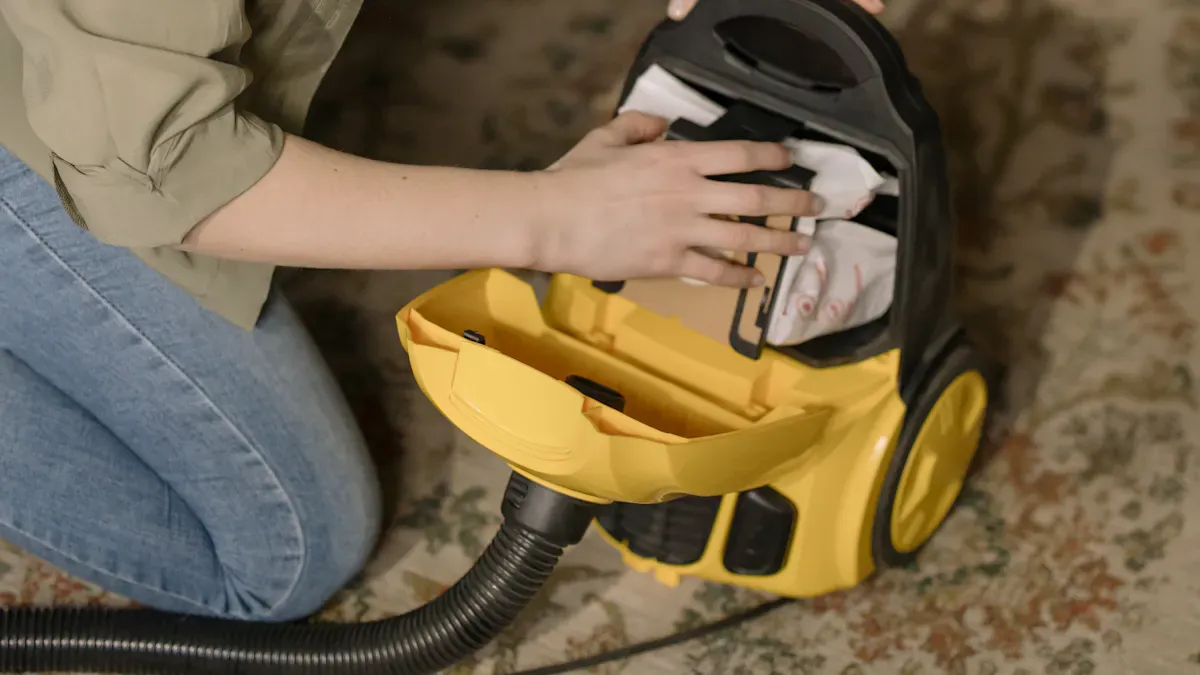
Dustbin Condition: A full dustbin or bag can block airflow, leading to reduced suction power. Regularly emptying the dustbin helps maintain optimal performance.
The design of the fan also plays a crucial role in determining airflow rates. For example, traditional upright vacuum cleaners often use a ‘dirty-air’ design, where the fan processes air mixed with dirt. This design allows for significant airflow but may not generate as much suction as ‘clean-air’ designs, which are optimized for higher efficiency. The airflow rate, measured in cubic feet per minute (CFM), directly correlates with how effectively your vacuum picks up dirt.
Vacuum Type | Airflow (CFM) | Water Lift (inches) |
|---|---|---|
Canister Vacuums | 100 or more | 90 or more |
Upright Vacuums | 60 or better | N/A |
By understanding these components and how they interact, you can make informed decisions about your vacuum cleaner. This knowledge will help you maximize its dust pickup efficiency.
Airflow and Suction Power
Understanding Suction
Suction power defines how well a vacuum cleaner pulls air, dirt, and debris through its intake system. You can measure suction power using two key metrics: air watts and water lift.
Air watts indicate how effectively a vacuum converts electrical energy into suction and airflow.
Water lift measures how high a vacuum can raise a column of water, which is crucial for cleaning dense debris.
Higher suction power leads to deeper cleaning by removing embedded dust and fine particles. When you choose a vacuum, look for models with high air watts and water lift ratings. These specifications often indicate better performance.
Enhancing Capture Efficiency
Airflow plays a vital role in enhancing suction power. Strong airflow allows your vacuum to pull in more air, which includes dust and dirt. This relationship is essential for effective cleaning. Here are some key points to consider:
Efficient dust collection relies on minimizing resistance in the system.
Proper duct design and airflow management prevent dust from settling in the ductwork.
Short duct runs and avoiding sharp turns enhance airflow, which is critical for effective dust transport.
When airflow increases, so does the vacuum’s ability to capture dirt. This means you can clean faster and with less effort. Additionally, effective suction power enhances filtration performance, ensuring cleaner exhaust air.
For example, Miele vacuums utilize expertly crafted motors designed for efficiency. They maintain strong suction even at lower wattages. The design of the floorhead forms an airtight seal, directing airflow efficiently into the dust bag or canister. This minimizes leakage and maximizes capture efficiency.
Tips to Boost Dust Pickup
Choosing the Right Vacuum
Selecting the right vacuum cleaner can significantly enhance your dust pickup efficiency. Here are some key features to consider:
Feature | Importance |
|---|---|
Airflow Ratings | Essential for determining the vacuum’s suction power and efficiency in cleaning. |
Filtration | Affects the quality of air released back into the environment, crucial for allergy sufferers. |
Cleaning Tools | Different tools enhance versatility and effectiveness on various surfaces. |
Capacity | Larger capacity means less frequent emptying, which can improve cleaning efficiency. |
Quality | A well-constructed vacuum lasts longer and performs better over time. |
Noise | Quieter models are more comfortable to use, allowing for better communication during operation. |
When you choose a high suction vacuum cleaner, look for models with strong airflow ratings. This feature ensures better dust extraction and overall cleaning performance. Bagged vacuums often maintain consistent airflow, while bagless models may lose efficiency as filters clog.
Maintenance for Airflow
Regular maintenance is crucial for keeping your vacuum running efficiently. Follow these tips to ensure optimal airflow:
Empty the dustbin regularly. A full dustbin can block airflow and reduce suction power.
Clean or replace filters as needed. Clogged filters obstruct air passage, leading to decreased suction and less effective dust collection.
Check for blockages in hoses and attachments. Excessively long hoses can increase airflow resistance, diminishing performance.
Regular maintenance helps prevent common breakdowns and ensures your vacuum cleaner lasts longer. Airflow is crucial for a properly functioning vacuum cleaner as it directly impacts suction power, the primary mechanism for lifting dirt and debris from surfaces.
By following these tips, you can boost dust pickup and maintain a clean indoor environment.
Airflow is vital for effective vacuum cleaning. It directly influences dust pickup efficiency. Key factors to consider include:
Factor | Description |
|---|---|
Airflow | Measured in cubic feet per minute (CFM), it determines the cleaning ability by moving dirt to the dust bag or container. |
Water Lift | Works in conjunction with airflow to enhance cleaning efficiency. |
Filtration Systems | Advanced filtration can increase resistance, affecting airflow and cleaning performance. |
Improved airflow not only boosts cleaning but also contributes to healthier indoor air quality. Regularly opening windows and enhancing air circulation can lower indoor pollutant levels.
When choosing a vacuum, prioritize airflow. This choice will lead to better dust pickup and a cleaner home environment.
FAQ
How does airflow affect my vacuum cleaner’s performance?
Airflow directly influences your vacuum’s ability to pick up dirt and allergens. Strong airflow ensures that your vacuum can efficiently draw in air, which carries visible dust and debris.
What should I look for when choosing a vacuum?
Focus on the vacuum’s airflow ratings and suction power. A vacuum with high airflow will improve dust pickup and overall cleaning efficiency.
How often should I maintain my vacuum cleaner?
Regular maintenance is essential. Empty the dustbin after each use, clean or replace filters monthly, and check hoses for blockages to maintain optimal airflow.
Can a vacuum cleaner help with allergens?
Yes, a vacuum can reduce allergens in your home. Models with advanced filtration systems trap allergens effectively, improving indoor air quality.
What is the difference between bagged and bagless vacuums?
Bagged vacuums often maintain consistent airflow and suction power, while bagless models may lose efficiency as filters clog. Choose based on your cleaning needs and preferences.
