

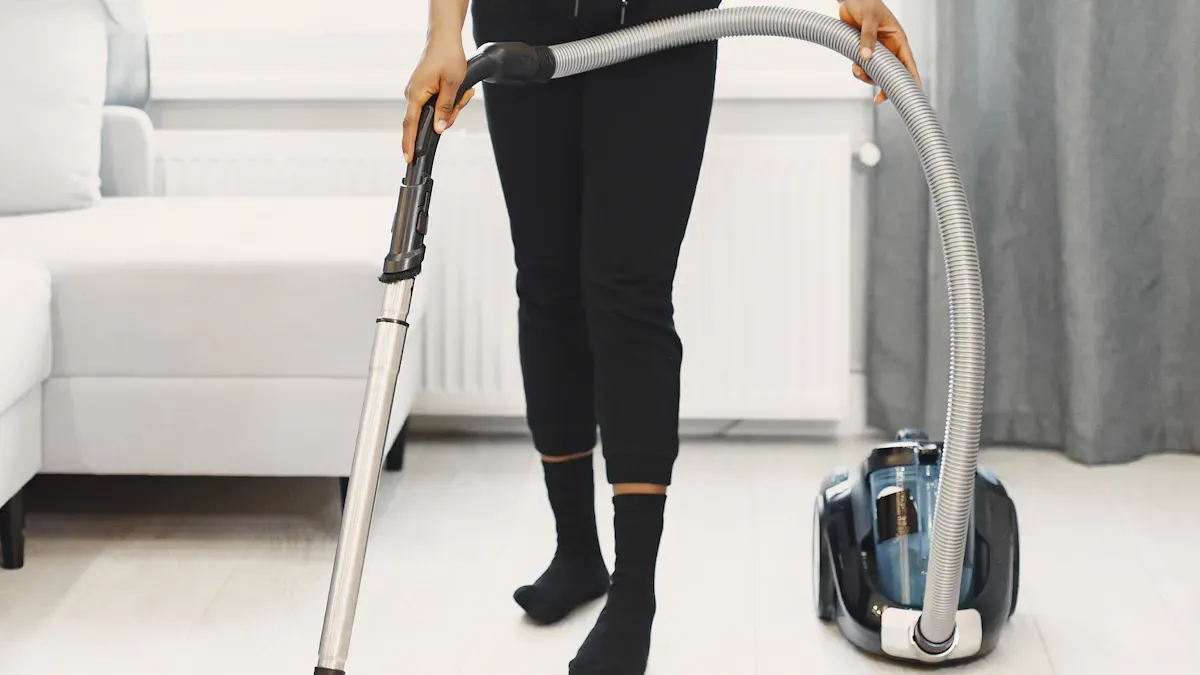
Airflow plays a critical role in how well your vacuum cleaner performs. It directly impacts cleaning efficiency, helping you remove dirt and debris effectively. Many consumers hold common misconceptions about vacuum cleaner airflow. For instance, some believe that higher lift equals better cleaning. This is misleading since airflow is what truly matters. Other myths include the idea that more CFM results in drier carpets, which is incorrect. Understanding these misconceptions can help you make better choices for your cleaning needs.
Vacuum Cleaner Airflow
Airflow Metrics
Airflow is a crucial concept in understanding how vacuum cleaners work. It refers to the movement of air from one location to another. Here are some key points about airflow:
Airflow is typically measured in cubic feet per minute (CFM).
The force of moving air is responsible for picking up dirt and transferring it into the vacuum cleaner’s bag or container.
Effective airflow is essential for assessing the effectiveness of a vacuum cleaner.
When you look at a vacuum cleaner’s specifications, you will often see the CFM value. This measurement indicates how much air the vacuum can move. For household models, canister vacuums usually have airflow of 100 CFM or more. High-performing upright vacuums often provide airflow of 60 CFM or better.
It’s important to note that the CFM value listed usually represents the maximum airflow the motor can produce. However, actual airflow during use is often lower due to restrictions from hoses, filters, and cleaning tools. For example, a vacuum rated at 100 CFM might only deliver about 20 CFM in real-world conditions.
Importance of Airflow and Suction
Understanding the difference between airflow and suction is vital for maximizing your vacuum cleaner’s performance. Airflow is essential for transporting dirt and dust into the vacuum cleaner. In contrast, suction refers to the force generated by the motor that draws air through the vacuum.
Effective airflow improves suction. Several factors influence both airflow and suction performance, including:
Motor power
Filter condition
Hose design
A vacuum with poor airflow will not perform well, regardless of its suction strength. Balanced suction and airflow lead to better cleaning efficiency. Higher airflow allows dirt to move smoothly through the vacuum, ensuring that you achieve a thorough clean.
Factors Influencing Performance

Filter Maintenance
Filter maintenance is crucial for maintaining strong airflow in your vacuum cleaner. When filters become clogged with dust and debris, they obstruct airflow. This forces your vacuum to work harder, leading to decreased efficiency. Regularly cleaning or replacing filters ensures that airflow remains strong. Here are some key points to consider:
Regular Cleaning: Clean your filters according to the manufacturer’s recommendations. This helps maintain optimal airflow.
Replacement: Replace filters when they become worn or damaged. A damaged filter can leak contaminants back into the air, exposing you to harmful particles.
Types of Filters: Different filters have varying effectiveness. For example, HEPA filters remove 99.97% of particles of 0.3 microns or larger, improving air quality significantly.
Filter Type | Effectiveness | Key Features |
|---|---|---|
HEPA Filter | Removes 99.97% of particles of 0.3 microns or larger | Traps microscopic particles, improving air quality and reducing allergens. |
Pre-Filter | Reduces microscopic particles before they reach the motor | Essential for preventing allergies and respiratory issues. |
Allergen Filter | Specifically designed to trap allergens and improve air quality | Helps in maintaining optimal airflow by preventing clogging. |
Vacuum Design and Attachments
The design of your vacuum cleaner significantly impacts its performance. A well-designed vacuum maintains airflow and enhances cleaning results. Here are some factors to consider regarding vacuum design:
Airflow (CFM): The cubic feet per minute (CFM) rating directly affects how effectively dirt is picked up. Higher CFM ratings generally indicate better performance.
Water Lift: This measurement indicates how well the vacuum performs as the bag fills. A vacuum with good water lift maintains suction even when the bag is nearing capacity.
Design Type: Different designs, such as direct air or by-pass motors, influence airflow and suction efficiency.
Specification | Importance in Cleaning Ability |
|---|---|
Airflow (CFM) | Directly affects how effectively dirt is picked up and moved. |
Water Lift | Indicates performance as the bag fills and filters load. |
Design Type | Influences airflow and suction efficiency (e.g., direct air vs. by-pass motor). |
Additionally, specialized attachments can enhance your vacuum’s performance. For instance, turbo brushes lift embedded dirt and hair from carpets, while crevice tools maximize airflow in tight corners. These tools ensure that hard-to-reach areas receive thorough cleaning.
By understanding the importance of filter maintenance and vacuum design, you can significantly improve your vacuum cleaner’s performance. Regular upkeep and choosing the right attachments will help you achieve optimal airflow and cleaning results.
10 Tips to Boost Cleaning Performance
Regular Filter Changes
Changing your vacuum cleaner’s filters regularly is essential for maintaining strong airflow. You should replace standard filters every 3 to 6 months. If you have pets, change them every 3 months. HEPA filters need replacement every 6 to 12 months. A worn filter can lead to reduced suction power and allow allergens to escape back into the air. Look for signs like increased allergy symptoms or a bad smell coming from your vacuum. These indicate that it’s time for a change.
Clear Blockages
Blockages can significantly reduce airflow and vacuum performance. Regularly check for clogs in the hose, filters, and brush roll. Here’s how to clear blockages effectively:
Check inside the dustbin for larger clumps of dirt.
Inspect the hose for deep-set clogs using a flashlight.
Remove any lint or small blockages from air entry points with tweezers.
Ensure all pathways are clear before reassembling the vacuum.
By keeping your vacuum free of blockages, you maintain strong suction and improve cleaning performance.
Optimize Settings for Surfaces
Adjusting your vacuum settings for different floor types can enhance cleaning performance. For carpets, set the height so the brush roll just touches the surface. For hardwood floors, keep the vacuum head slightly above the surface to avoid scratches. Using the right settings helps maximize airflow and ensures effective dirt pickup.
Clean the Brush Roll
A dirty brush roll can hinder your vacuum’s performance. Hair and debris can wrap around the brush, causing drag and reducing suction. You should clean the brush roll weekly to maintain optimal performance. Regular inspection ensures it can turn freely, allowing for effective pet hair pickup and deep carpet cleaning.
By following these tips, you can significantly boost your vacuum cleaner’s performance. Regular maintenance and adjustments for different surfaces will help you achieve the best cleaning results.
Airflow is vital for your vacuum cleaner’s performance. It directly affects how well your vacuum picks up dirt and debris. Remember these key points about airflow:
Specification | Importance |
|---|---|
Airflow (CFM) | Critical for determining cleaning ability; more airflow means better dirt pickup. |
Motor Power | Influences suction, which is essential for effective airflow. |
Resistance | Affects airflow due to bags and filters, impacting overall performance. |
Design | Impacts how airflow is managed and utilized in the vacuum cleaner. |
Implementing the tips discussed can significantly enhance your cleaning experience. Regular filter changes, clearing blockages, and optimizing settings will help you achieve better results. Share your experiences and let others know how these tips improved your vacuum’s performance!
FAQ
What is the difference between airflow and suction?
Airflow refers to the movement of air through the vacuum, while suction is the force that draws dirt into the vacuum. Both airflow and suction work together to enhance cleaning performance.
How can I improve my vacuum’s suction power?
To boost suction power, regularly clean or replace filters, clear blockages, and maintain the brush roll. These actions help maintain optimal airflow and suction.
Why is airflow important for vacuum cleaners?
Airflow is crucial because it determines how effectively your vacuum picks up dirt and debris. Strong airflow and suction work together to ensure thorough cleaning.
How often should I change my vacuum filters?
Change standard filters every 3 to 6 months. If you have pets, consider changing them every 3 months. HEPA filters should be replaced every 6 to 12 months for optimal performance.
Can vacuum design affect airflow and suction?
Yes, vacuum design significantly impacts airflow and suction. A well-designed vacuum maintains airflow, enhancing overall cleaning efficiency and performance.
