

Vacuum cleaner noise often causes frustration for many households. You might find it disruptive, especially during quiet moments or when cleaning around sleeping children. Understanding vacuum cleaner noise levels can help you choose a more suitable model.
The noise levels of vacuum cleaners typically range from 75 to 85 decibels, which is comparable to other common appliances. For instance, a refrigerator operates at about 35 to 50 decibels, while a dishwasher is around 50 to 60 decibels.
Finding effective yet quiet cleaning solutions is essential. You deserve a cleaner that minimizes noise without sacrificing performance.
Appliance | Decibel Level (dB) |
|---|---|
Vacuum Cleaner | 75-85 |
Refrigerator | 35-50 |
Dishwasher | 50-60 |
Garbage Disposal | 80 |
Blender | 85-90 |
Key Takeaways
Vacuum cleaners typically operate at 75 to 85 decibels, similar to a garbage disposal. Understanding these levels helps you choose a quieter model.
Regular maintenance, like cleaning filters and brush rolls, can significantly reduce noise. Keep your vacuum in top shape for a quieter cleaning experience.
Adjusting power settings to lower modes can decrease noise while still providing effective cleaning. Use the quiet mode for a peaceful environment.
Look for features like brushless motors and noise-reducing materials in vacuums. These innovations help minimize sound without sacrificing performance.
Consider models like the Miele Complete C3 Marin for quiet operation. Investing in a low-noise vacuum enhances your home environment.
Noise Sources in Vacuum Cleaners
Motor and Suction
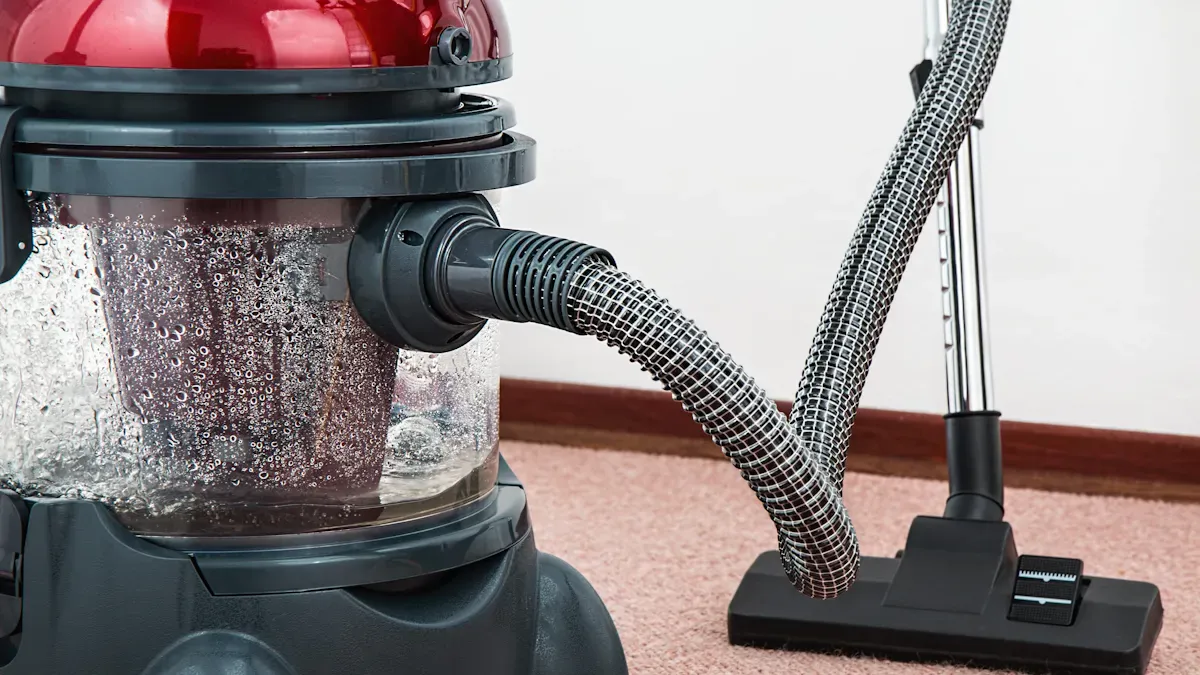
The motor is the primary source of noise in vacuum cleaners. It converts electrical power into fan motion, generating sound. Larger and faster motors tend to create more noise due to increased vibration. Here are some factors that contribute to motor noise:
Motor size and speed: Bigger motors running at higher speeds produce louder sounds.
Airflow turbulence: Air moving through narrow spaces can create turbulence, amplifying the noise.
Resonance of materials: Lightweight materials may vibrate more, increasing overall noise levels.
Acoustic foam: Some vacuum cleaners include this material to absorb vibrations and reduce noise.
The typical decibel range for vacuum cleaner motors is between 60 to 85 dB. However, older or more powerful models can exceed 90 dB. Continuous exposure to noise levels above 70 dB can damage your hearing over time. Sounds above 85 dB significantly increase the risk of hearing loss, especially with prolonged use.
Brush Roll and Floor Type
The brush roll also contributes to vacuum cleaner noise levels. Its interaction with different surfaces can create varying sound levels. For example, when the height setting is incorrect for a specific floor type, it can lead to increased airflow and noise. Here are some key points to consider:
Brush roll contact: The way the brush roll interacts with the floor can add extra noise.
Floor type: Hard surfaces may produce more sound than carpets due to the brush roll’s action.
Using the wrong height setting can amplify noise. Additionally, a clogged or damaged hose can restrict airflow, leading to louder operation.
Understanding these noise sources helps you make informed decisions when selecting a vacuum cleaner. By choosing models with quieter motors and adjustable brush rolls, you can enjoy a more peaceful cleaning experience.
Vacuum Cleaner Noise Levels: Reduction Methods
Maintenance Tips
You can significantly reduce vacuum cleaner noise levels through regular maintenance. Here are some effective practices to consider:
Regular Maintenance: Keep your vacuum cleaner in top shape. Check for worn-out parts and replace them as needed. Worn components can cause excessive vibration and noise.
Clean Filters and Brush Rolls: Clogged filters force the motor to work harder, increasing noise. A dirty brush roll creates drag, leading to additional sound. Regularly clean both to ensure efficient operation.
Remove Debris: Hair and strings can wrap around the brush roller. This creates drag and adds noise. Regular checks help keep sound levels steady.
Incorporating sound-absorbing materials can also help. For instance, using acoustic foam around the pump installation area can dampen noise emissions. These materials absorb sound waves, minimizing overall noise levels.
Here’s a table summarizing some maintenance practices that can help reduce noise:
Maintenance Practice | Description |
|---|---|
Regular Maintenance | Keeping the vacuum pump well-maintained is crucial for minimizing noise. This includes regular checks and replacements of worn-out parts that can cause excessive vibration or noise. |
Using Silencers or Mufflers | Incorporating silencers or mufflers on the intake and exhaust ports can dramatically reduce air movement noise. These devices are designed to diffuse air quietly and efficiently. |
Applying Soundproofing Materials | Incorporating soundproofing materials such as acoustic foam around the pump installation area can further dampen noise emissions. These materials absorb and prevent sound waves from reflecting off hard surfaces, minimizing overall noise levels. |
Power Settings Adjustment
Adjusting the power settings on your vacuum cleaner can also help manage noise levels. Many modern vacuums offer different power modes. Here’s how they compare:
Power Mode | Power Consumption | Noise Level |
|---|---|---|
Low/Quiet | 351 watts/5 amps | 50 decibels |
High | 966 watts/8.6 amps | 60 or 70 decibels |
Using the low or quiet mode can significantly reduce noise while still providing effective cleaning. This setting uses less power and operates at a lower decibel level, making it ideal for quiet environments.
Low-Noise Vacuum Technology
Quiet Vacuum Features
Low-noise vacuum cleaners come with several innovative features designed to minimize sound while maintaining cleaning efficiency. Here are some key features you should look for:
Brushless Motors: These motors reduce friction and vibration, leading to quieter operation.
Noise-Reducing Materials: Manufacturers use special materials in the vacuum housing to dampen vibrations.
Optimized Airflow Systems: These systems minimize noise from air movement, allowing for a more peaceful cleaning experience.
Additionally, many low-noise vacuums include:
An ultra-quiet floor nozzle for effective cleaning with minimal noise.
A Sound Shield™ design that reduces sound levels around the dust bag holder and motor filter frame.
Silent Air Technology™ that optimizes airflow while lowering noise.
These advancements not only enhance your cleaning experience but also contribute to a quieter home environment.
Recommended Models
When considering a quiet vacuum cleaner, you have several excellent options. Here’s a comparison of some top-rated models based on consumer reviews:
Model Name | Noise Level (dB) | Key Features |
|---|---|---|
Miele Complete C3 Marin | 60-65 | Known for its quiet operation and reliability. |
SEBO Airbelt D4 | 60-70 | Features insulated housing for reduced turbulence. |
Dyson V11 Torque Drive | 70-75 | Powerful suction with a quieter design. |
The Miele Complete C3 Marin stands out as a particularly quiet vacuum cleaner. Despite its weight, users appreciate its reliability and performance. This model operates at noise levels comparable to normal conversation, making it ideal for homes with children or pets.
By choosing a vacuum with these features, you can significantly reduce vacuum cleaner noise levels while still achieving effective cleaning results.
In summary, understanding vacuum cleaner noise levels can help you choose a quieter model. You learned about the main noise sources, including the motor and brush roll. You also discovered effective methods to reduce noise, such as regular maintenance and adjusting power settings.
To minimize vacuum cleaner noise in your home, consider these actions:
Adjust the power setting to the lowest necessary level for general cleaning.
Use high-quality replacement parts to improve performance.
Regularly inspect parts like the belt and filters to prevent excessive noise.
Choose vacuum attachments wisely, as some can be noisier than others.
By taking these steps, you can enjoy a more peaceful cleaning experience. Consider investing in a low-noise vacuum to enhance your home environment.
FAQ
What is the average noise level of vacuum cleaners?
Most vacuum cleaners operate between 75 to 85 decibels. This level is similar to the noise of a garbage disposal or blender.
How can I reduce vacuum cleaner noise?
You can reduce noise by maintaining your vacuum, adjusting power settings, and using sound-absorbing materials. Regularly clean filters and brush rolls to improve efficiency.
Are there specific quiet vacuum models?
Yes, models like the Miele Complete C3 Marin and SEBO Airbelt D4 are known for their quiet operation. They feature advanced technology to minimize noise.
Is prolonged exposure to vacuum noise harmful?
Yes, continuous exposure to noise levels above 70 decibels can damage your hearing over time. Sounds above 85 decibels significantly increase this risk.
What features should I look for in a quiet vacuum?
Look for brushless motors, noise-reducing materials, and optimized airflow systems. These features help minimize sound while maintaining cleaning efficiency.
